
Latest Drought News
By Paul Harrison | Founder & Publisher, Orbis Weather
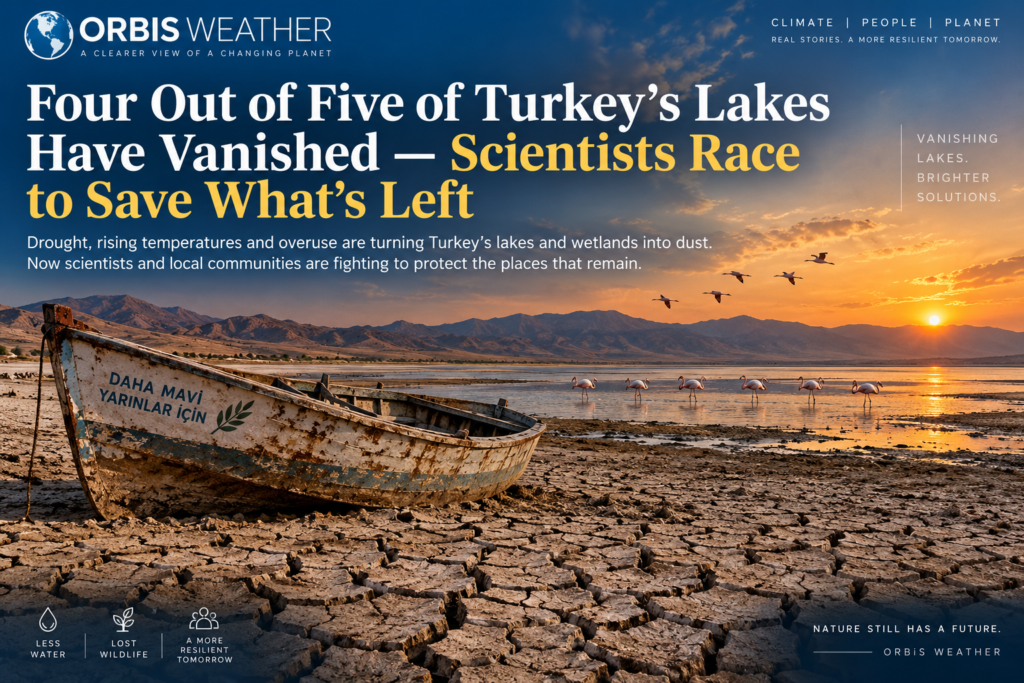

🌍 Four Out of Five of Turkey’s Lakes Have Vanished — Scientists Race to Save What’s Left
ORBiS WEATHER | ENVIRONMENT & CLIMATE
A slow-moving environmental disaster is transforming the landscape of Turkey.
Lakes that once supported fishing villages, migrating flamingos, pelicans and vast wetland ecosystems are shrinking into patches of mud, salt and dust. Some have disappeared almost entirely.
Recent reporting puts the scale of the crisis at an extraordinary 186 of roughly 240–250 lakes dried up over recent decades — close to four out of every five. The losses have accelerated as drought and rising temperatures collide with irrigation, dams, groundwater pumping and other human demands for water.
And new scientific research suggests the problem extends well beyond Turkey’s better-known lakes.
A nationwide 2026 study of 688 karst lakes found that 279, or 41%, were completely dry during the researchers’ 2020–2023 assessment. Among polje lakes — lakes formed in large, flat karst depressions — the drying rate reached 54%.
Together, the findings reveal a country undergoing a profound transformation of its freshwater landscape.
💧 A Water Crisis Decades in the Making
Climate change is an important part of the story, but scientists and conservationists say this cannot simply be blamed on a lack of rain.
For decades, water has been redirected from natural lakes and wetlands toward agriculture, reservoirs and other development. Groundwater pumping — including illegal wells — has placed additional pressure on aquifers that help sustain lakes during dry periods.
Dams can also prevent rivers and streams from delivering the environmental flows wetlands need to survive.
Agriculture is particularly important because irrigation can remove enormous quantities of both surface water and groundwater.
The result is a dangerous combination:
🔥 Rising temperatures
🌧️ Reduced and increasingly erratic rainfall
🚜 Intensive agricultural irrigation
💧 Groundwater depletion
🏗️ Dams and water diversions
⛏️ Industrial and mining demand
☀️ Higher evaporation
Scientific research on Turkey’s karst lakes found a strong relationship between climate and whether lakes retained water. Lakes in cooler and wetter environments were more likely to survive, while warmer and drier areas faced greater risks of desiccation.
🏜️ Meke Lake Lost More Than 98% of Its Water Storage
Few places illustrate the crisis as dramatically as Meke Lake in central Turkey.
The volcanic crater lake was once famous for its striking landscape. Researchers have now reconstructed decades of its decline using Landsat satellite observations, drone mapping and groundwater records.
Their 2026 study found that Meke’s surface area fell from approximately 0.49 square kilometers in the mid-1980s to less than 0.06 square kilometers by 2020.
The decline in actual water volume was even worse.
Researchers estimate the lake lost more than 98% of its peak water storage. Satellite observations from 2021 through 2025 detected no spatially continuous surface-water boundary.
The study also identified persistent groundwater drought beginning around 2007, demonstrating how falling groundwater and prolonged drought can combine to destroy a groundwater-dependent lake.
🦩 Marmara Lake Nearly Disappeared
Marmara Lake in western Turkey offers another warning.
The lake once covered roughly 17 square miles (45 square kilometers) and supported thousands of birds as well as fishing, farming and tourism.
Beginning around 2011, however, the lake rapidly retreated.
By 2021 it had lost approximately 98% of its surface area. What had once been open water became vegetation, dry earth and abandoned lakebed.
Water diversions associated with agricultural irrigation played an important role in its decline, while prolonged drought made recovery increasingly difficult.
For communities surrounding the lake, this was not merely an ecological change.
Fishing disappeared. Tourism suffered. Agriculture became more difficult. Some residents left.
An environmental disaster became an economic and social one.
🦆 The Fight to Save Turkey’s “Lake of Birds”
In northeastern Turkey, conservationists are fighting to prevent another important wetland from meeting the same fate.
Lake Kuyucuk was once an extraordinary gathering place for migratory birds.
Conservation ecologist and ornithologist Çağan Hakkı Şekercioğlu recalled counting more than 40,000 birds across the small lake, including huge concentrations of ruddy shelducks.
But researchers began noticing rapidly falling water levels.
According to Şekercioğlu, the lake measured around 13 meters (43 feet) deep in 1997. By the time his conservation work began it was around 4.5 meters (15 feet), and by 2010 its deepest point was only about one meter (3.3 feet).
The causes again formed a familiar pattern.
Local dams blocked streams feeding the lake. Groundwater wells lowered underground reserves. Water was diverted for livestock and agriculture.
Conservationists responded with emergency measures.
They worked with villagers to dismantle illegal dams so streams could once again flow toward the wetland. Authorities also drilled a well to pump water into Kuyucuk — an intervention Şekercioğlu has compared to an emergency medical treatment rather than a permanent solution.
Kuyucuk has not returned to its former condition.
But neither has it completely become a dust bowl.
The remaining wetland continues to provide habitat for wildlife.
🦅 Lake Aktaş Becomes an Increasingly Important Refuge
Farther north lies Lake Aktaş, straddling the border between Turkey and Georgia.
Its unusual geopolitical location may inadvertently have helped protect it.
Military and border restrictions have limited boating and some human disturbance around portions of the lake, creating an unexpected sanctuary for wildlife.
Conservationists say it remains an exceptionally important site for migratory birds and one of Turkey’s remaining places where Dalmatian and great white pelicans can both be found.
The surrounding northeastern wetlands sit along the Caucasus-Eurasian migration corridor, connecting breeding and wintering habitats across enormous distances.
That means losing these lakes would not only be Turkey’s problem.
Birds using the wetlands travel across international borders, linking ecosystems in Asia, Europe and Africa.
🦩 Flamingo Habitat Is Disappearing Too
Turkey’s shrinking wetlands have already produced disturbing scenes.
Tuz Gölü — Turkey’s famous Salt Lake — has historically provided breeding habitat for large numbers of flamingos. Severe drought and falling water levels have contributed to mass bird deaths.
Other important lakes, including İznik, Van, Burdur, Eğirdir and Seyfe, have also experienced falling water levels or other ecological stresses.
When a wetland disappears, wildlife loses far more than water.
Fish populations collapse.
Aquatic plants change.
Bird nesting areas vanish.
Food chains break apart.
Migrating species may arrive after flying thousands of miles only to discover that the wetland where generations previously stopped to feed and rest no longer exists.
⚠️ Dry Lakes Can Create New Environmental Hazards
The danger does not necessarily disappear when the water does.
Exposed lakebeds can contain accumulated salts, agricultural chemicals and other pollutants.
Once dry, fine sediment can be lifted by strong winds and transported into surrounding communities and farmland.
At the same time, shrinking lakes can experience deteriorating water quality as contaminants become concentrated into increasingly small volumes of water.
Lower water levels can encourage algae and other ecological changes, while falling groundwater forces communities and farmers to drill deeper wells.
In central Anatolia’s Konya Basin, extreme groundwater depletion has also been associated with the formation of large sinkholes.
It can become a destructive feedback loop:
Less water → more groundwater pumping → lower aquifers → shrinking wetlands → greater water scarcity → even more pumping.
🌧️ There Are Signs That Recovery Is Possible
The picture is not entirely hopeless.
Heavy precipitation during parts of 2026 helped revive some previously dry wetlands in central Turkey, with birds returning to areas where water had temporarily reappeared.
But rainfall alone cannot solve the underlying problem.
A few unusually wet months cannot compensate indefinitely for decades of groundwater depletion, stream diversion and excessive water consumption.
Long-term recovery would require reducing water extraction, improving irrigation efficiency, protecting feeder streams, restoring environmental flows and limiting groundwater pumping to sustainable levels.
Conservation projects at places such as Kuyucuk demonstrate that intervention can make a difference — particularly when local communities, scientists and governments work together.
🛰️ Satellites Are Watching Turkey’s Lakes Disappear
Modern satellite technology is also giving scientists a clearer view of the crisis.
Landsat imagery and other remote-sensing systems allow researchers to reconstruct decades of changes in lake shorelines, even in areas where historical measurements are limited.
Turkey’s Lake Monitoring Portal, for example, uses satellite observations covering 1984–2024 to examine long-term changes in major lakes and compare those changes with precipitation, temperature and evaporation.
The latest scientific work goes even further, combining satellite observations with high-resolution drone mapping and groundwater records to calculate not merely how much surface area disappeared, but how much actual water volume was lost.
Those measurements are making the scale of the transformation increasingly difficult to ignore.
🌍 Turkey’s Warning to the World
Turkey’s disappearing lakes are part of a much larger global freshwater crisis.
Lakes around the planet are under pressure from warming temperatures, drought, groundwater extraction, irrigation and human development.
But Turkey provides an especially dramatic example of what can happen when climatic stress and unsustainable water management occur simultaneously.
A lake can survive several dry years.
It may survive increased irrigation.
It may even survive dams, wells and rising temperatures individually.
But combine all of those pressures for decades and eventually a threshold is crossed.
The shoreline retreats.
Wetlands become fields.
Fishing boats sit on dry ground.
Migratory birds lose ancient stopping points.
And eventually a place that appeared permanent on maps for generations can simply disappear.
Scientists and conservationists racing to protect Lake Aktaş, Lake Kuyucuk and Turkey’s remaining wetlands are therefore fighting for something larger than individual bodies of water.
They are trying to preserve an interconnected freshwater ecosystem before another blue patch on the map turns brown.
For Turkey, the disappearance of nearly four out of five traditionally counted lakes is already an environmental warning of extraordinary proportions.
For the rest of the world, it may be a glimpse of what happens when a freshwater crisis is allowed to continue for too long.
— ORBiS WEATHER | Global Environment & Climate
This is an evolving environmental story. Orbis Weather will continue monitoring Turkey’s drought, lakes, wetlands and water crisis as new satellite observations and scientific research become available.
🌍 Türkiye’de Her Beş Gölden Dördü Yok Oldu — Bilim İnsanları Geriye Kalanları Kurtarmak İçin Yarışıyor
ORBIS WEATHER | ÇEVRE & İKLİM
Türkiye’nin doğal manzarasını değiştiren, yavaş ilerleyen büyük bir çevre felaketi yaşanıyor.
Bir zamanlar balıkçı köylerini, göçmen flamingoları, pelikanları ve geniş sulak alan ekosistemlerini besleyen göller küçülerek çamur, tuz ve tozla kaplı alanlara dönüşüyor. Bazıları ise neredeyse tamamen ortadan kaybolmuş durumda.
Son haber ve araştırmalara göre, Türkiye’de son birkaç on yılda yaklaşık 240–250 gölden 186’sı kurudu. Bu, ülkedeki geleneksel olarak sayılan göllerin yaklaşık beşte dördüne karşılık geliyor.
Bu kayıplar; kuraklık ve yükselen sıcaklıkların tarımsal sulama, barajlar, yeraltı suyu kullanımı ve akarsuların yönünün değiştirilmesi gibi insan kaynaklı baskılarla birleşmesi sonucunda hızlandı.
2026 yılında yayımlanan ülke çapındaki yeni bir araştırma ise sorunun Türkiye’nin en bilinen göllerinin çok ötesine uzandığını ortaya koyuyor.
Araştırmada incelenen 688 karstik gölün 279’unun, yani %41’inin tamamen kuruduğu belirlendi. Polye göllerinde ise kuruma oranının %54’e ulaştığı tespit edildi.
Bu bulgular birlikte değerlendirildiğinde, Türkiye’nin tatlı su kaynaklarının olağanüstü büyük bir dönüşüm geçirdiği görülüyor.
💧 On Yıllardır Büyüyen Bir Su Krizi
İklim değişikliği hikâyenin önemli bir parçası olsa da bilim insanları ve çevreciler sorunun yalnızca yağış eksikliğine bağlanamayacağını söylüyor.
On yıllardır doğal göl ve sulak alanlara ulaşması gereken suyun bir bölümü tarım, rezervuarlar ve çeşitli kalkınma projelerine yönlendiriliyor.
Kaçak kuyular da dahil olmak üzere yoğun yeraltı suyu kullanımı, kurak dönemlerde göllerin varlığını sürdürebilmesini sağlayan akiferler üzerinde ek baskı oluşturuyor.
Barajlar ise nehir ve derelerin sulak alanlara taşıdığı hayati su akışını azaltabiliyor.
Özellikle tarımsal sulama hem yüzey hem de yeraltı sularından çok büyük miktarlarda su çekilmesine neden olabiliyor.
Ortaya son derece tehlikeli bir tablo çıkıyor:
🔥 Yükselen sıcaklıklar
🌧️ Azalan ve düzensizleşen yağışlar
🚜 Yoğun tarımsal sulama
💧 Yeraltı su seviyelerinin düşmesi
🏗️ Barajlar ve suyun yönünün değiştirilmesi
⛏️ Sanayi ve madencilik kaynaklı su talebi
☀️ Artan buharlaşma
Türkiye’deki karstik göller üzerine yapılan bilimsel araştırmalar, iklim koşulları ile göllerin su tutabilme kapasitesi arasında güçlü bir ilişki bulunduğunu gösteriyor.
Daha serin ve yağışlı bölgelerdeki göllerin hayatta kalma olasılığı daha yüksekken, sıcak ve kurak bölgelerdeki göller çok daha büyük bir kuruma riskiyle karşı karşıya.
🏜️ Meke Gölü Suyunun %98’inden Fazlasını Kaybetti
Türkiye’deki su krizinin en çarpıcı örneklerinden biri İç Anadolu’daki Meke Gölü.
Volkanik krater gölü, bir zamanlar olağanüstü manzarasıyla tanınıyordu. Bilim insanları Landsat uydu görüntüleri, insansız hava araçları ve yeraltı suyu kayıtlarından yararlanarak gölün onlarca yıllık gerilemesini yeniden inceledi.
2026 tarihli bir araştırmaya göre Meke Gölü’nün yüzey alanı, 1980’lerin ortalarında yaklaşık 0,49 kilometrekareden 2020 yılına gelindiğinde 0,06 kilometrekarenin altına düştü.
Su hacmindeki kayıp ise çok daha dramatikti.
Araştırmacılar gölün en yüksek su depolama kapasitesinin %98’inden fazlasını kaybettiğini tahmin ediyor.
2021–2025 arasındaki uydu gözlemlerinde sürekli bir yüzey suyu sınırı dahi tespit edilemedi.
Araştırma ayrıca yaklaşık 2007’den itibaren kalıcı bir yeraltı suyu kuraklığına işaret ediyor. Bu durum, uzun süreli kuraklık ile düşen yeraltı su seviyelerinin birleşerek yeraltı suyuyla beslenen bir gölü nasıl yok edebileceğini gösteriyor.
🦩 Marmara Gölü Neredeyse Tamamen Yok Oldu
Türkiye’nin batısındaki Marmara Gölü de başka bir ciddi uyarı niteliğinde.
Göl bir zamanlar yaklaşık 45 kilometrekarelik bir alanı kaplıyor; binlerce kuşa yaşam alanı sağlarken balıkçılığı, tarımı ve turizmi de destekliyordu.
Ancak yaklaşık 2011’den itibaren göl hızla çekilmeye başladı.
2021 yılına gelindiğinde yüzey alanının yaklaşık %98’ini kaybetmişti.
Bir zamanlar açık suyla kaplı alanlar bitki örtüsüne, kuru toprağa ve terk edilmiş göl tabanına dönüştü.
Tarımsal sulama amacıyla yapılan su yönlendirmeleri gölün gerilemesinde önemli rol oynarken, uzun süreli kuraklık toparlanmayı daha da zorlaştırdı.
Göl çevresindeki topluluklar için yaşananlar yalnızca ekolojik bir değişim değildi.
Balıkçılık ortadan kalktı.
Turizm zarar gördü.
Tarım zorlaştı.
Bazı bölge sakinleri başka yerlere göç etti.
Çevresel bir felaket, ekonomik ve toplumsal bir krize dönüştü.
🦆 Türkiye’nin “Kuş Gölü”nü Kurtarma Mücadelesi
Türkiye’nin kuzeydoğusunda çevreciler, önemli bir sulak alanın daha aynı kaderi yaşamaması için mücadele ediyor.
Kuyucuk Gölü, bir zamanlar göçmen kuşların olağanüstü yoğunlukta toplandığı bir yerdi.
Koruma ekoloğu ve kuş bilimci Çağan Hakkı Şekercioğlu, küçük gölde bir zamanlar 40.000’den fazla kuş saydığını, bunların arasında çok sayıda angıt bulunduğunu aktarıyor.
Ancak araştırmacılar su seviyesinin hızla düştüğünü fark etmeye başladı.
Şekercioğlu’nun aktardığı verilere göre gölün derinliği 1997 yılında yaklaşık 13 metreydi. Koruma çalışmalarının başladığı dönemde bu rakam yaklaşık 4,5 metreye, 2010 yılında ise en derin noktasında yalnızca bir metreye kadar geriledi.
Nedenler yine tanıdık bir tablo ortaya koyuyordu.
Yerel barajlar gölü besleyen akarsuları engelledi. Yeraltı su kuyuları rezervleri azalttı. Su, hayvancılık ve tarım için başka alanlara yönlendirildi.
Çevreciler bunun üzerine acil önlemler aldı.
Köylülerle birlikte çalışılarak bazı kaçak bentler kaldırıldı ve akarsuların yeniden sulak alana ulaşması sağlandı. Yetkililer ayrıca Kuyucuk Gölü’ne su pompalamak için bir kuyu açtı.
Şekercioğlu bu müdahaleyi kalıcı bir çözümden ziyade acil tıbbi müdahaleye benzetiyor.
Kuyucuk henüz eski haline dönmedi.
Ancak tamamen bir toz çölüne de dönüşmedi.
Kalan sulak alan, yaban hayatı için hâlâ önemli bir yaşam alanı oluşturuyor.
🦅 Aktaş Gölü Giderek Daha Önemli Bir Sığınağa Dönüşüyor
Daha kuzeyde, Türkiye ile Gürcistan sınırında Aktaş Gölü bulunuyor.
Gölün sıra dışı jeopolitik konumu, farkında olmadan korunmasına katkıda bulunmuş olabilir.
Askerî ve sınır güvenliği kısıtlamaları, gölün bazı bölümlerinde tekne kullanımını ve insan faaliyetlerini sınırlandırarak yaban hayatı için beklenmedik bir sığınak oluşturdu.
Çevreciler gölün göçmen kuşlar açısından son derece önemli olduğunu ve Türkiye’de hem tepeli pelikanın hem de ak pelikanın görülebildiği önemli bölgelerden biri olduğunu belirtiyor.
Kuzeydoğu Türkiye’deki sulak alanlar, Kafkasya-Avrasya göç koridoru üzerinde bulunuyor.
Bu nedenle bu göllerin kaybedilmesi yalnızca Türkiye’nin sorunu olmayacak.
Bu sulak alanları kullanan kuşlar uluslararası sınırları aşarak Asya, Avrupa ve Afrika’daki ekosistemleri birbirine bağlıyor.
🦩 Flamingoların Yaşam Alanları da Kayboluyor
Türkiye’de sulak alanların küçülmesi şimdiden endişe verici görüntülere yol açtı.
Türkiye’nin ünlü Tuz Gölü, uzun yıllardır çok sayıda flamingo için önemli bir üreme alanı.
Ancak şiddetli kuraklık ve düşen su seviyeleri geçmiş yıllarda toplu kuş ölümlerine katkıda bulundu.
İznik, Van, Burdur, Eğirdir ve Seyfe gibi diğer önemli göller de düşen su seviyeleri veya çeşitli ekolojik baskılarla karşı karşıya kaldı.
Bir sulak alan ortadan kalktığında yaban hayatı yalnızca suyunu kaybetmez.
Balık popülasyonları çöker.
Su bitkileri değişir.
Kuşların yuvalama alanları yok olur.
Besin zincirleri parçalanır.
Göçmen kuşlar binlerce kilometre uçtuktan sonra, nesiller boyunca dinlenmek ve beslenmek için kullandıkları sulak alanın artık var olmadığını görebilir.
⚠️ Kuruyan Göller Yeni Çevresel Tehlikeler Yaratabilir
Tehlike su ortadan kalktığında sona ermiyor.
Açığa çıkan göl tabanlarında yıllar boyunca birikmiş tuzlar, tarımsal kimyasallar ve diğer kirleticiler bulunabilir.
Göl tabanı kuruduğunda ince tortular kuvvetli rüzgârlarla havaya karışarak çevredeki yerleşimlere ve tarım alanlarına taşınabilir.
Aynı zamanda küçülen göllerde kirleticiler giderek daha az miktarda suda yoğunlaştığı için su kalitesi kötüleşebilir.
Düşük su seviyeleri alg çoğalmasını ve diğer ekolojik değişimleri teşvik ederken, düşen yeraltı su seviyeleri çiftçileri ve yerel halkı daha derin kuyular açmaya zorlayabilir.
İç Anadolu’daki Konya Havzası’nda aşırı yeraltı suyu kaybı, büyük obrukların oluşumuyla da ilişkilendiriliyor.
Ortaya tehlikeli bir döngü çıkıyor:
Daha az su → daha fazla yeraltı suyu kullanımı → daha düşük akifer seviyeleri → küçülen sulak alanlar → daha büyük su kıtlığı → daha fazla su kullanımı.
🌧️ İyileşmenin Mümkün Olduğunu Gösteren İşaretler Var
Tablo tamamen umutsuz değil.
2026’nın bazı dönemlerinde görülen yoğun yağışlar, İç Anadolu’daki daha önce kurumuş bazı sulak alanların yeniden su tutmasına yardımcı oldu.
Suyun geri dönmesiyle birlikte kuşlar da bazı bölgelere yeniden gelmeye başladı.
Ancak yağmur tek başına temel sorunu çözemez.
Birkaç olağan dışı yağışlı ay, onlarca yıllık yeraltı suyu kaybını, akarsuların yönünün değiştirilmesini ve aşırı su tüketimini sonsuza kadar telafi edemez.
Uzun vadeli iyileşme için su kullanımının azaltılması, sulama sistemlerinin daha verimli hale getirilmesi, gölleri besleyen akarsuların korunması, doğal su akışlarının yeniden sağlanması ve yeraltı suyu kullanımının sürdürülebilir seviyelere indirilmesi gerekiyor.
Kuyucuk gibi bölgelerde yürütülen koruma çalışmaları, özellikle yerel topluluklar, bilim insanları ve kamu kurumları birlikte hareket ettiğinde müdahalenin sonuç verebileceğini gösteriyor.
🛰️ Uydular Türkiye’nin Göllerinin Kayboluşunu İzliyor
Modern uydu teknolojileri, bilim insanlarının yaşanan krizi çok daha net görmesini sağlıyor.
Landsat görüntüleri ve diğer uzaktan algılama sistemleri sayesinde, geçmişte yeterli ölçüm yapılmamış bölgelerde bile göl kıyılarının onlarca yıllık değişimi yeniden oluşturulabiliyor.
Türkiye’deki gölleri izleyen uydu tabanlı projeler, büyük göllerde 1984–2024 arasındaki uzun vadeli değişimleri inceleyerek bunları yağış, sıcaklık ve buharlaşmayla karşılaştırabiliyor.
Yeni bilimsel çalışmalar ise daha da ileri gidiyor.
Uydu görüntüleri, yüksek çözünürlüklü drone haritaları ve yeraltı suyu kayıtları birlikte kullanılarak yalnızca göl yüzeyindeki küçülme değil, gerçekte ne kadar su hacminin kaybolduğu da hesaplanabiliyor.
Bu ölçümler Türkiye’nin yaşadığı dönüşümün boyutunu görmezden gelmeyi giderek zorlaştırıyor.
🌍 Türkiye’den Dünyaya Bir Uyarı
Türkiye’de kaybolan göller, çok daha büyük bir küresel tatlı su krizinin parçası.
Dünyanın dört bir yanındaki göller; yükselen sıcaklıklar, kuraklık, yeraltı suyu kullanımı, tarımsal sulama ve insan faaliyetlerinin baskısı altında.
Ancak Türkiye, iklim kaynaklı baskılar ile sürdürülebilir olmayan su yönetimi aynı anda gerçekleştiğinde neler olabileceğinin özellikle çarpıcı bir örneğini sunuyor.
Bir göl birkaç kurak yılı atlatabilir.
Artan sulamaya dayanabilir.
Barajların, kuyuların veya yükselen sıcaklıkların etkilerine tek tek direnebilir.
Ancak tüm bu baskılar onlarca yıl boyunca aynı anda devam ettiğinde sonunda kritik bir eşik aşılır.
Kıyı çizgisi geri çekilir.
Sulak alanlar kuru araziye dönüşür.
Balıkçı tekneleri susuz göl tabanlarında kalır.
Göçmen kuşlar binlerce yıldır kullandıkları durakları kaybeder.
Ve sonunda nesiller boyunca haritalarda kalıcı görünen bir göl tamamen ortadan kaybolabilir.
Aktaş Gölü, Kuyucuk Gölü ve Türkiye’nin geriye kalan sulak alanlarını korumaya çalışan bilim insanları ve çevreciler bu nedenle yalnızca birkaç gölü kurtarmaya çalışmıyor.
Birbirine bağlı büyük bir tatlı su ekosistemini, haritadaki bir başka mavi alan kahverengiye dönüşmeden önce korumaya çalışıyorlar.
Türkiye’de geleneksel olarak sayılan göllerin yaklaşık beşte dördünün kaybolmuş olması, şimdiden olağanüstü büyüklükte bir çevresel uyarı niteliğinde.
Dünyanın geri kalanı içinse bu durum, tatlı su krizinin çok uzun süre kontrolsüz bırakılması halinde geleceğin nasıl görünebileceğine dair ürkütücü bir işaret olabilir.
— ORBIS WEATHER | Küresel Çevre & İklim
Bu, gelişmekte olan bir çevre haberidir. Orbis Weather, yeni uydu gözlemleri ve bilimsel araştırmalar yayımlandıkça Türkiye’deki kuraklık, göller, sulak alanlar ve su krizindeki gelişmeleri takip etmeye devam edecektir.
About the Author
Paul Harrison — Founder & Publisher, Orbis Weather
Paul Harrison founded Orbis Weather in 2026 to make global weather and natural-hazard information easier to find, follow and understand. His coverage includes tropical cyclones, severe weather, extreme temperatures, earthquakes, volcanoes, wildfires, flooding and significant natural disasters worldwide.
View all articles by Paul Harrison → | Editorial Standards →
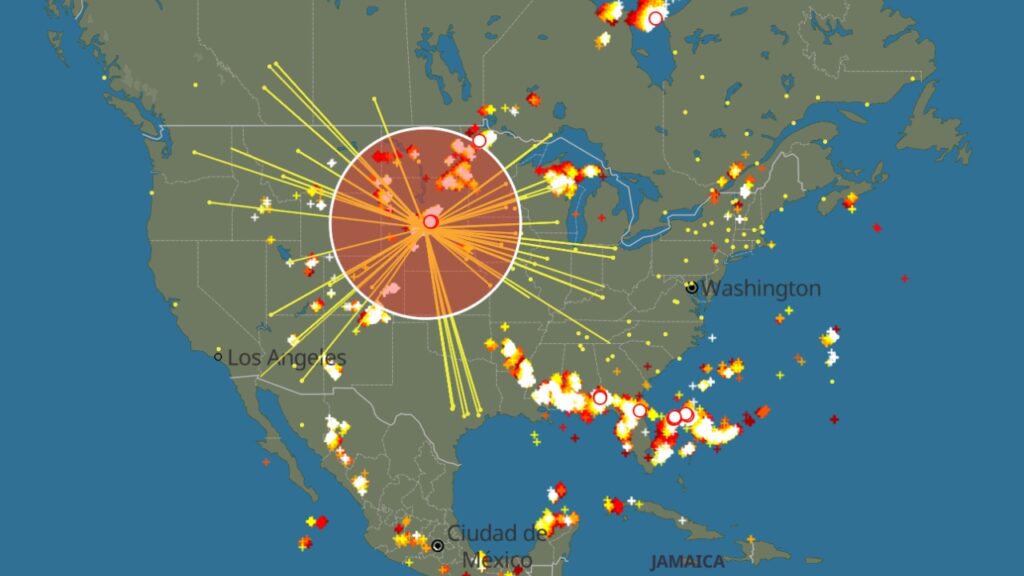
Live Lightning Map
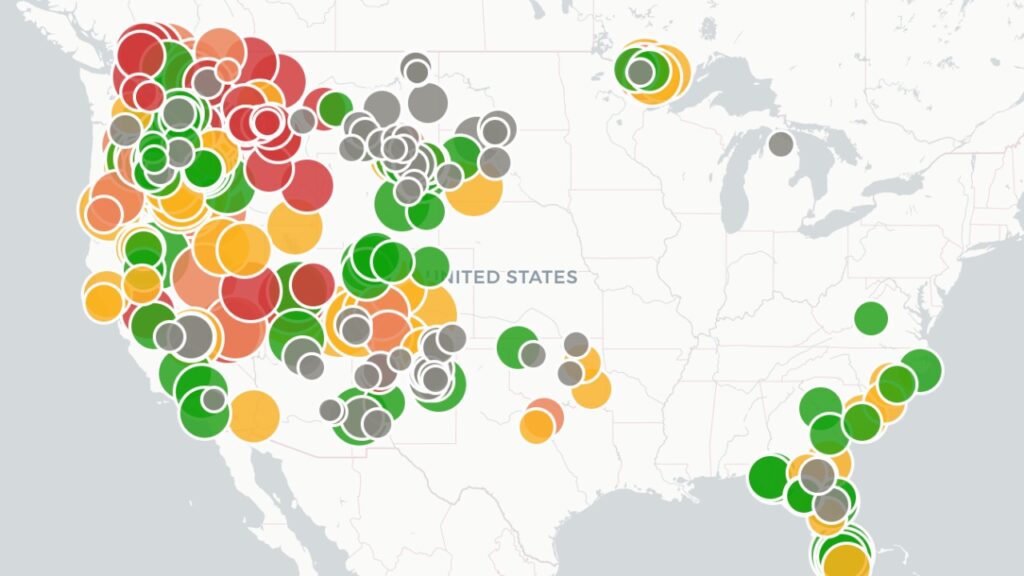
Live U.S. Wildfire Tracker
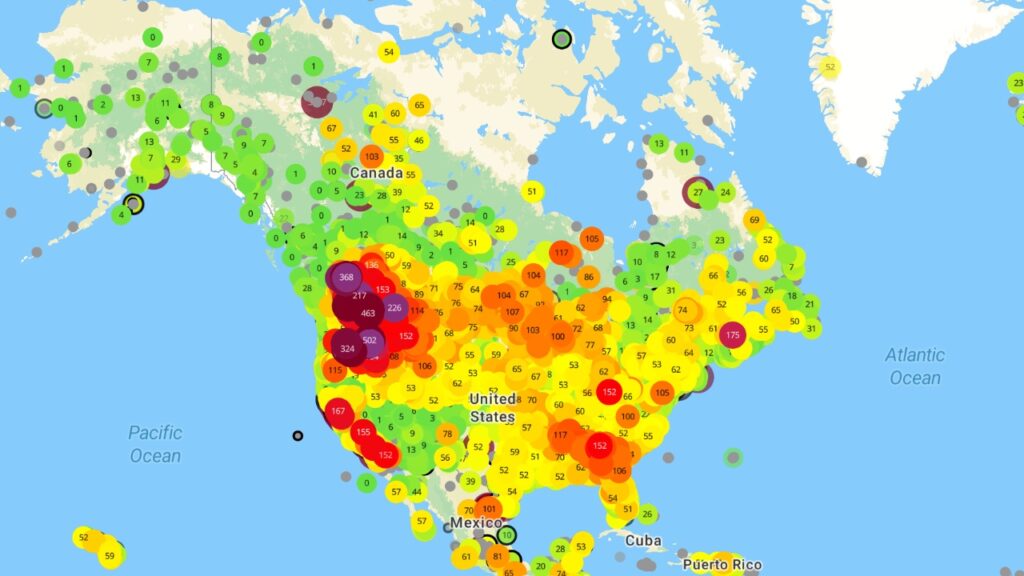
Live Wildfire Smoke & Air Quality Tracker
Live Earthquake Map
Live Volcano Eruption Tracker