Lightning Capital of the World: Earth’s Top Lightning Hotspots

⚡ Lightning Capital of Earth: The Most Lightning-Prone Places in the World
Every second, thunderstorms somewhere on Earth are producing flashes of lightning. But lightning is far from evenly distributed around the planet.
Some locations experience thunderstorms so frequently that lightning becomes a defining part of their climate. From Venezuela’s legendary Catatumbo storms to the thunderstorm corridors of central Africa and the summer lightning of Florida, several regions stand apart as extraordinary lightning hotspots.
At the top of the list is one remarkable place.
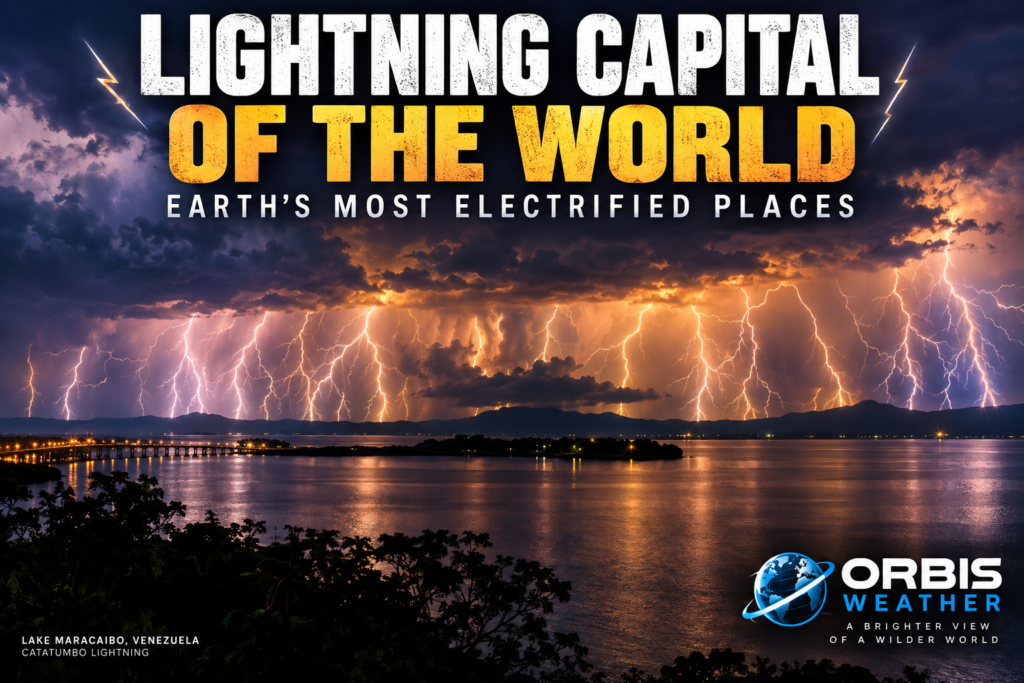
⚡ Lake Maracaibo, Venezuela — The Lightning Capital of Earth
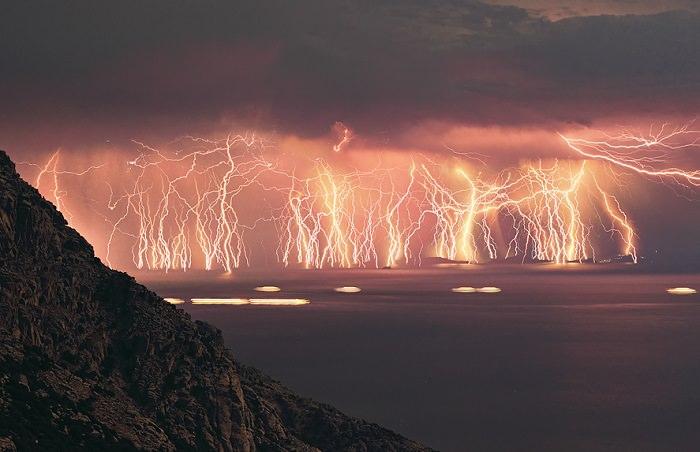
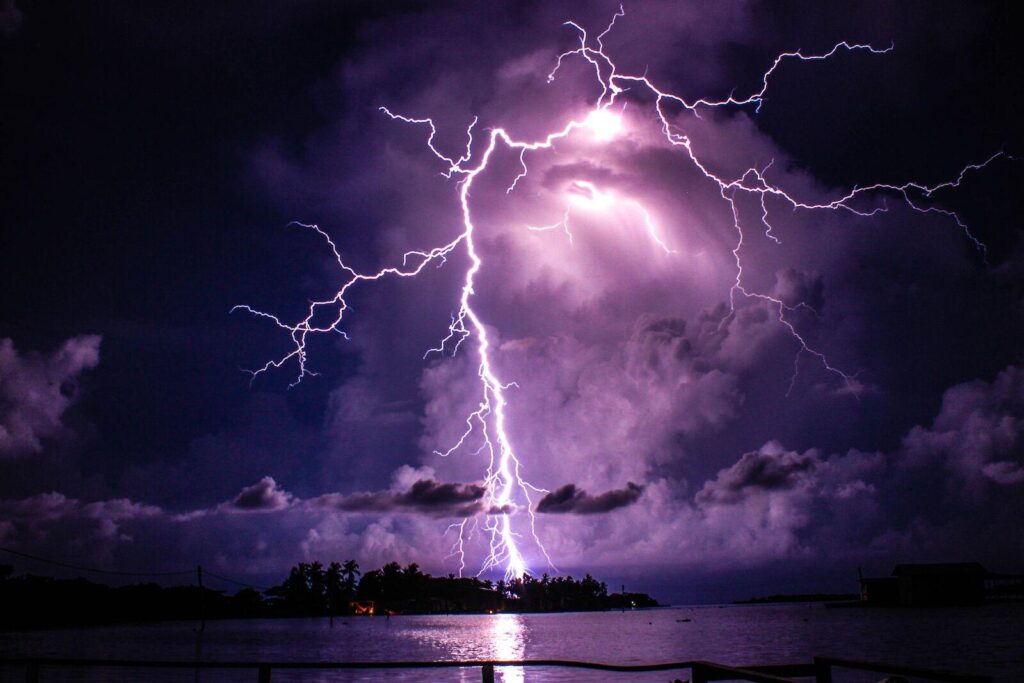
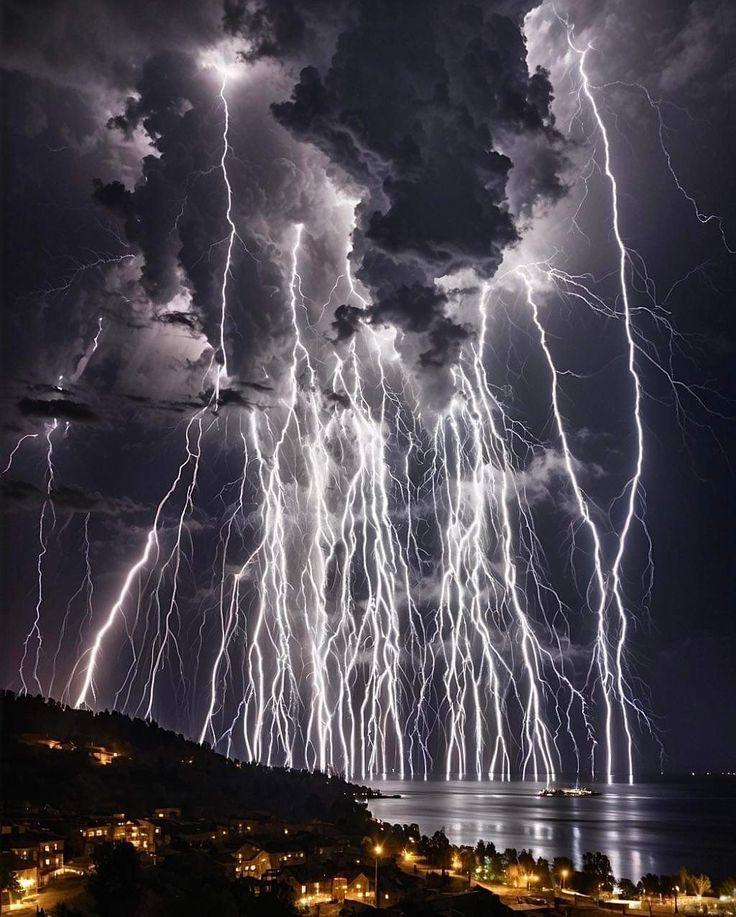
Lake Maracaibo in northwestern Venezuela is widely recognized as the world’s leading lightning hotspot.
NASA’s global lightning climatology found an average flash extent density equivalent to about 389 flashes per day over Lake Maracaibo, putting it ahead of every other location measured in that analysis.
Earlier high-resolution research using NASA’s Lightning Imaging Sensor found approximately 233 flashes per square kilometer per year at the core hotspot. The same research found thunderstorms developing around the lake on an average of roughly 297 nights per year.
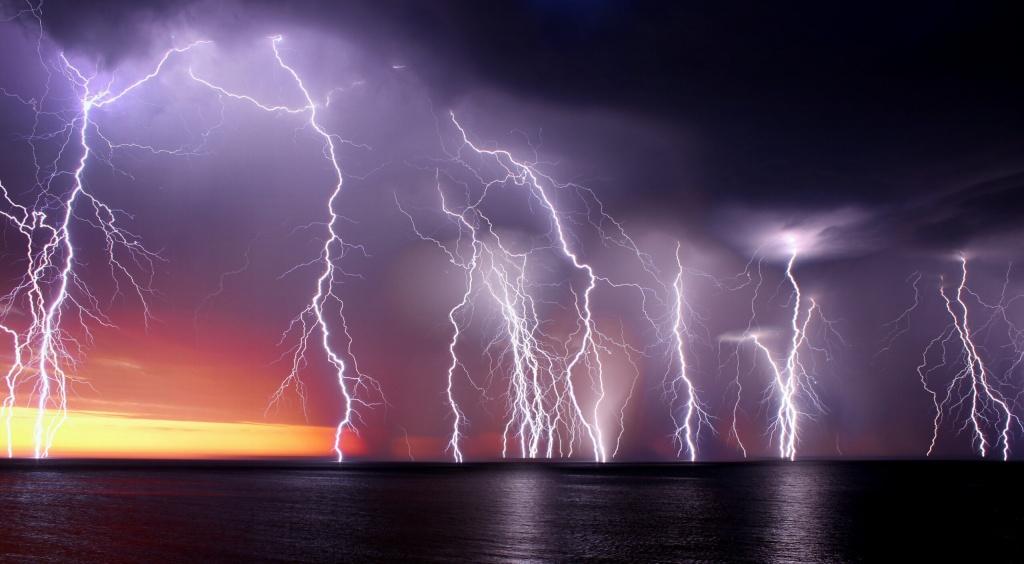
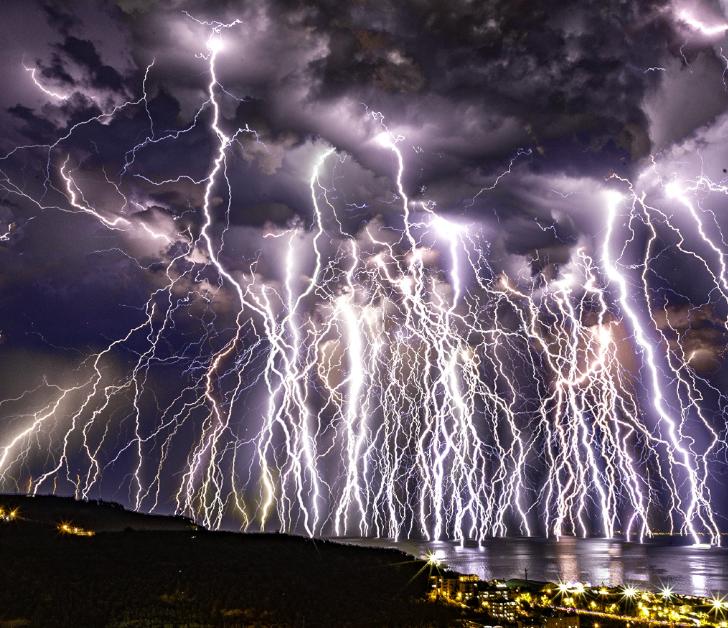
The phenomenon is commonly known as Catatumbo Lightning.
🌩️ Why Is There So Much Lightning Here?
Lake Maracaibo sits in an almost perfect geographical setting for thunderstorms.
The lake contains warm water surrounded by mountainous terrain. During nighttime hours, cooler air descends from the surrounding mountains and converges with warm, moisture-rich air over the lake.
The result is powerful convection and repeated thunderstorm development.
Unlike many places where thunderstorms move through occasionally, storms can repeatedly develop over essentially the same area around Lake Maracaibo.
NASA research shows that the lightning is strongly concentrated during nighttime hours.
That combination of:
🌊 Warm lake water
⛰️ Surrounding mountains
💨 Converging winds
💧 Abundant tropical moisture
🌡️ Warm temperatures
creates one of Earth’s most reliable natural thunderstorm factories.
🌍 Other Major Lightning Hotspots Around the World
Lake Maracaibo may hold the title, but it isn’t alone.
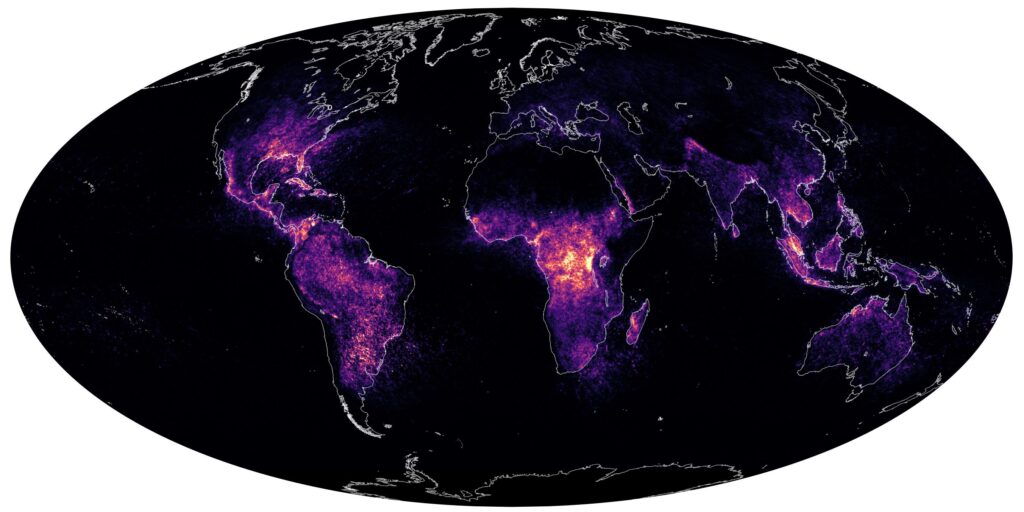
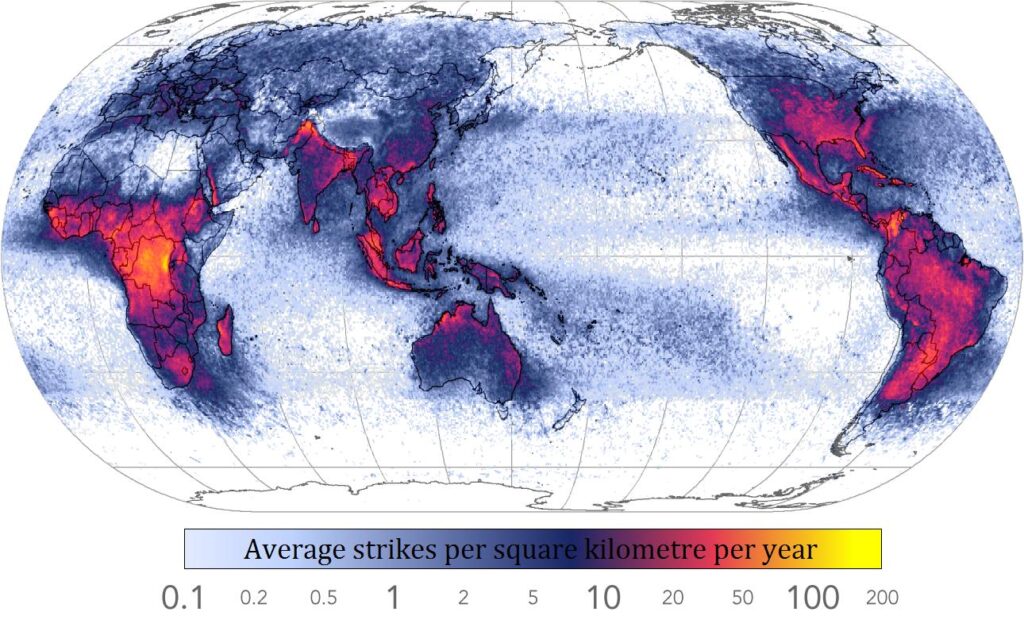
Lightning hotspots occur across tropical Africa, South America, Asia and North America.
In fact, research examining the world’s 500 leading lightning hotspots found an extraordinary geographical concentration in Africa:
Africa — 283 hotspots
Asia — 87
South America — 67
North America — 53
Oceania — 10
Mountains and large tropical lakes appear repeatedly among these hotspots.
⚡ Lake Kivu — Rwanda and Democratic Republic of Congo
Another extraordinary lightning zone sits around Lake Kivu, along the border between Rwanda and the Democratic Republic of Congo.
NASA’s updated lightning climatology found Lake Kivu averaging approximately 368 flashes per day by its flash-extent-density measure — remarkably close to Lake Maracaibo’s 389.
Central and eastern Africa contain some of the greatest concentrations of lightning on Earth.
Warm temperatures, abundant moisture, mountainous terrain and strong tropical convection combine to produce frequent thunderstorms.
⚡ Democratic Republic of Congo — Africa’s Lightning Hotspot
The Congo Basin was once considered Earth’s primary lightning hotspot before higher-resolution satellite observations identified Lake Maracaibo.
It remains one of the world’s great thunderstorm regions.
NASA satellite climatology shows exceptionally high lightning activity across parts of the Democratic Republic of Congo and surrounding central Africa.
Africa actually contains more of the world’s major lightning hotspots than any other continent.
🇺🇸 Florida — Lightning Capital of the United States
You don’t have to travel to Venezuela or central Africa to encounter exceptional lightning.
Florida has one of North America’s most active thunderstorm environments.
The National Weather Service has long described central Florida as the “Lightning Capital” of the United States.
One particularly active corridor stretches through the Florida peninsula between the Tampa region and Florida’s Atlantic coast.
🌩️ Why Does Florida Get So Much Lightning?
Florida’s geography creates a natural thunderstorm machine.
The peninsula sits between two large bodies of warm water:
🌊 Atlantic Ocean
🌊 Gulf of Mexico
During hot summer days, sea breezes develop from both coasts.
As those boundaries move inland, they can collide over the peninsula.
The collision forces warm, humid air upward, helping thunderstorms explode across interior Florida.
The National Weather Service explains that these Atlantic and Gulf sea-breeze interactions are one of the main reasons the inland region between Tampa and Cape Canaveral has historically been called the Lightning Capital of the United States.
This is why seemingly quiet Florida summer mornings can transform into booming thunderstorms by afternoon.
⚡ Orlando and Central Florida
Central Florida deserves special attention.
The Orlando region sits near the heart of Florida’s summertime thunderstorm corridor.
Vaisala’s 2024 U.S. lightning analysis found Orlando recorded 1,072 lightning events per square mile during 2024, placing it among the most lightning-active communities measured nationally that year.
Orlando International Airport also experiences substantial lightning disruption. Vaisala reported an average of approximately 109 hours under lightning warnings per year over the preceding decade.
Florida’s combination of heat, humidity and colliding sea breezes makes thunderstorms a routine part of the state’s summer climate.
⚡ Texas — America’s Lightning Giant by Total Activity
Florida’s reputation doesn’t mean it always records the greatest total number of lightning events.
Texas is enormous, and that matters when counting total lightning across an entire state.
Vaisala recorded approximately 40.4 million lightning events across Texas during 2024, compared with roughly 15.6 million in Florida.
That illustrates an important distinction:
Total lightning measures everything occurring across a large geographical area.
Lightning density measures how concentrated that activity is.
A huge state can therefore record more total lightning while a smaller region experiences more concentrated lightning activity.
🌍 Why Is Tropical Africa So Lightning-Prone?
One of the most striking features of a global lightning map is Africa.
Central Africa sits beneath intense tropical heating where warm, humid air rises vigorously.
Mountain ranges and large inland lakes further enhance convection.
Researchers studying global lightning hotspots found that many of the strongest continental hotspots occur near major mountain ranges, demonstrating how important topography can be in triggering thunderstorms.
Areas around the East African Rift and its large lakes are especially notable.
🏔️ Mountains Can Create Lightning Hotspots
Mountains repeatedly appear near the world’s lightning hotspots.
During daylight hours, mountain slopes heat rapidly. Warm air rises along the terrain, helping initiate convection.
At night, mountain and valley winds can reverse direction and create convergence over nearby lakes and valleys.
Add tropical moisture and you have an ideal thunderstorm environment.
Lightning hotspots have been identified around mountainous regions of Africa, the Himalayas, Indonesia and Papua New Guinea.
🌊 Why Isn’t the Ocean the Lightning Capital?
This may seem surprising.
Earth’s oceans contain enormous amounts of moisture, yet lightning generally occurs more frequently over land.
Land heats much faster than water during the day.
That stronger heating creates more vigorous rising air and atmospheric instability, which can fuel powerful thunderstorms.
NASA observations show that continental lightning tends to peak during the afternoon, while some oceanic and lake-related lightning maxima occur at night.
Lake Maracaibo is unusual because its warm water, surrounding mountains and local wind circulations combine to create an exceptionally persistent nighttime thunderstorm environment.
⚠️ Lightning Is More Than a Spectacle
Lightning is beautiful from a distance, but every thunderstorm presents a potentially deadly hazard.
Lightning can strike well away from the heaviest rain, and people do not need to be directly underneath a thunderstorm’s strongest core to be at risk.
If you can hear thunder, conditions are close enough for lightning to pose a threat.
The safest response is to move inside a substantial building or enclosed hard-topped vehicle and remain protected until the storm has safely moved away.
Florida’s frequent summer thunderstorms make lightning awareness particularly important for beachgoers, boaters, golfers, construction workers and anyone spending extended periods outdoors.
⚡ Lightning Capitals of the World — At a Glance
| Location | Why It Stands Out |
|---|---|
| 🇻🇪 Lake Maracaibo, Venezuela | Earth’s leading lightning hotspot in NASA climatology |
| 🇷🇼🇨🇩 Lake Kivu, Rwanda/DR Congo | Among Earth’s highest lightning-frequency areas |
| 🇨🇩 Democratic Republic of Congo | Part of Earth’s greatest concentration of lightning hotspots |
| 🌍 East African Rift region | Lakes, mountains, tropical moisture and intense convection |
| 🇺🇸 Central Florida | Major U.S. lightning and thunderstorm corridor |
| 🇺🇸 Orlando, Florida | Exceptionally high recent lightning density |
| 🇺🇸 Texas | Extremely high total annual lightning activity |
| 🌏 Indonesia/Papua New Guinea | Tropical convection enhanced by mountainous terrain |
Different lightning datasets measure activity in different ways, including flashes, lightning events and flash extent density, so figures from separate observing systems should not be treated as directly interchangeable.
🌎 The Lightning Capital of Earth
For now, the crown belongs to Lake Maracaibo, Venezuela.
Its legendary Catatumbo thunderstorms represent one of Earth’s most extraordinary recurring weather phenomena.
But Lake Maracaibo is part of a much larger global pattern.
From the mountains and lakes of tropical Africa to Indonesia’s rugged islands and Florida’s sea-breeze thunderstorms, geography determines where Earth’s atmosphere most frequently puts on its electrical show.
And for millions of people living in these lightning hotspots, thunder isn’t an occasional visitor.
It’s part of the climate.
Orbis Weather will continue tracking lightning, severe thunderstorms and extreme weather around the world.