About Orbis Weather
🌎 Weather Data, Global Hazards & Independent Weather Reporting
Orbis Weather is an independent weather and natural-hazards information platform dedicated to making important weather, climate and disaster information easier to find, understand and follow.
From hurricanes and winter storms to earthquakes, volcanoes, wildfires, flooding and extreme temperatures, Orbis Weather brings together trusted data from official scientific and government sources and combines it with original reporting, daily briefings, analysis and interactive tools.
Our goal is simple:
Give readers a clear picture of what is happening around the world — without sensationalism and without presenting uncertain information as fact.
Orbis Weather was established in 2026 and continues to expand its collection of global weather reports, hazard trackers, maps and monitoring tools.
🌦️ Our Mission
Weather information is available from thousands of different sources, but finding the information that matters can often require visiting multiple government agencies, weather services, satellite platforms and scientific organizations.
Orbis Weather was created to make that process easier.
Our mission is to:
🌪️ Track significant weather events around the world.
🌀 Monitor tropical cyclones and areas of tropical development.
🌋 Follow earthquakes, volcanoes and other geological hazards.
🔥 Monitor wildfires, extreme heat and drought.
🌊 Track flooding, coastal conditions and other water-related hazards.
❄️ Follow winter weather, snowfall and extreme cold.
🛰️ Make official weather and hazard data easier to discover and understand.
📰 Provide regularly updated weather and natural-disaster reports that place individual events into a broader global picture.
Rather than simply presenting isolated maps and data feeds, Orbis Weather aims to help readers understand what is happening, where it is happening and why it matters.
👤 Founder & Publisher
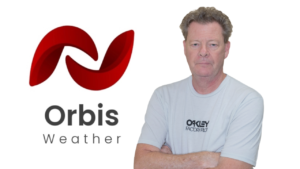
Paul Harrison
Founder & Publisher — Orbis Weather
Orbis Weather was founded by Paul Harrison in 2026 with the goal of building a comprehensive online destination for people interested in weather, tropical systems and natural hazards.
Paul oversees the development, publishing and ongoing expansion of Orbis Weather, including its daily and weekly reports, global hazard coverage and collection of interactive monitoring tools.
The site’s approach combines official meteorological and scientific information with research, editorial curation and technology designed to make complex or widely scattered information easier for the public to follow.
Orbis Weather is independently operated and is not affiliated with NOAA, the National Weather Service, the National Hurricane Center, USGS or any other government agency.
📰 How We Produce Our Reports
Orbis Weather monitors a large amount of weather and natural-hazard information every day.
Technology and research tools may assist us in identifying developing events, organizing information, comparing sources and monitoring conditions around the world.
However, our objective is not simply to reproduce information available elsewhere.
For reports published by Orbis Weather, we aim to:
Identify significant events
We monitor weather and natural hazards worldwide and determine which developments are most useful or important for our readers.
Check reliable sources
Whenever possible, important facts such as storm intensity, earthquake magnitude, warning status, rainfall, temperature or wildfire information are checked against primary meteorological, geological or government sources.
Add context
A number by itself often tells only part of the story. We aim to explain where an event is occurring, what is causing it when reasonably established, what areas may be affected and what readers should watch next.
Distinguish observations from forecasts
Observed conditions, model guidance and official forecasts are not the same thing. Orbis Weather attempts to make those distinctions clear.
Update developing stories
Weather and natural disasters can change quickly. Reports may be updated as better information becomes available.
Avoid unnecessary sensationalism
Extreme weather can be dramatic without exaggeration. We aim to describe hazards according to the available evidence and the terminology used by appropriate authorities.
🔎 Our Data-Source Policy
Orbis Weather believes weather and natural-hazard information should be traceable to reliable sources.
Whenever practical, we prioritize primary government, meteorological, geological and scientific sources.
Sources used throughout Orbis Weather may include:
🇺🇸 NOAA — National Oceanic and Atmospheric Administration
🌀 National Hurricane Center (NHC)
⛈️ National Weather Service (NWS)
🌪️ Storm Prediction Center (SPC)
🌊 NOAA Ocean Service and National Data Buoy Center
🌎 United States Geological Survey (USGS)
🛰️ NASA
🌐 World Meteorological Organization (WMO)
🌋 Official volcano observatories and geological agencies
🌍 National meteorological agencies around the world
🔥 Government wildfire and emergency-management agencies
We may also use established weather-data providers, public monitoring networks, research institutions and reputable news organizations when primary information is unavailable or additional reporting is needed.
Where appropriate, Orbis Weather provides links or attribution so readers can examine the original information themselves.
📊 Live Data, Forecasts & Models
Many Orbis Weather tools display information obtained directly or indirectly from external weather and scientific data providers.
We make an important distinction between:
Observed data — measurements or events that have actually been recorded.
Official forecasts and warnings — forecasts, advisories, watches or warnings issued by authorized meteorological agencies.
Computer-model guidance — simulations showing possible future atmospheric conditions.
Model guidance represents possible outcomes and should not automatically be interpreted as an official forecast.
Weather models can change significantly from one run to another, particularly several days into the future.
When official watches, warnings or evacuation instructions are issued, those official instructions should always take precedence over information displayed on Orbis Weather.
🛰️ Our Interactive Tools
Orbis Weather provides interactive maps, trackers and monitoring tools designed to make weather and natural-hazard information easier to access.
Depending on the tool, information may originate from official agencies or established third-party data networks.
These tools are intended primarily for education, general information and situational awareness.
Orbis Weather does not control the underlying external data feeds and cannot guarantee that every source will always be available, complete or error-free.
If a data provider experiences an outage or delay, information displayed through an Orbis Weather tool may also be delayed.
✍️ Original Reporting & Editorial Value
Orbis Weather uses information from many sources, but our reports are intended to do more than reproduce those sources.
Our editorial work includes selecting significant events, comparing information, organizing developments, explaining weather patterns, converting measurements when helpful and presenting information in a format that allows readers to understand the larger situation.
Recurring features include global disaster briefings, tropical weather reports, extreme-temperature reports, regional hazard briefings and weekly global weather and climate reports.
The underlying observations may originate with official agencies, but the selection, organization, presentation, commentary and editorial context of Orbis Weather reports are produced for Orbis Weather readers.
🔄 Corrections & Updates Policy
Accuracy matters to us.
Weather and natural-disaster reporting presents a particular challenge because information can change rapidly.
Storm intensity changes. Earthquake magnitudes are revised. Wildfire acreage changes. Rainfall totals are updated. Forecast tracks move.
When reliable new information becomes available, Orbis Weather may update an article or report to reflect the latest information.
If we discover a significant factual error, we aim to correct it as quickly as reasonably possible.
Minor spelling, grammar, formatting or clarity changes may be made without a correction notice.
When a significant factual correction materially changes the meaning of an article, we may include an update or correction notice explaining what changed.
Readers who believe they have found an error are encouraged to contact us.
⚠️ Important Weather & Safety Disclaimer
Orbis Weather is not an official weather-warning or emergency-management service.
Information published on this website is provided for general information, education and situational awareness.
During severe or hazardous weather, earthquakes, volcanic activity, wildfires, flooding, tsunamis or other emergencies, always follow instructions from local authorities and the appropriate official meteorological, geological or emergency-management agency.
In the United States, official weather watches, warnings and advisories are issued by the National Weather Service and National Hurricane Center.
Outside the United States, follow your country’s official meteorological and emergency-management authorities.
Never rely exclusively on Orbis Weather when making decisions involving personal safety.
🌍 Why Orbis?
The name Orbis comes from the Latin word associated with the world or globe.
That’s exactly what we want Orbis Weather to represent:
One place to see what’s happening across our planet.
From a developing hurricane in the Atlantic to an earthquake in the Pacific, extreme heat in Europe, flooding in Southeast Asia or a winter storm crossing North America, our goal is to make important environmental information easier to discover and understand.
And we’re continuing to build.
📬 Contact Orbis Weather
Have you spotted an incorrect report, outdated link or malfunctioning data source?
Have an idea for a weather tool or topic you’d like us to cover?
We welcome feedback from our readers.
Orbis Weather
Independent Weather & Natural Hazard Information
Established 2026
Weather data, straight from the source — with the context to understand it.