



NOAA Releases Winter Outlook as Powerful El Niño Threatens Stormier U.S. Winter
ORBIS WEATHER | Thursday, October 15, 2026
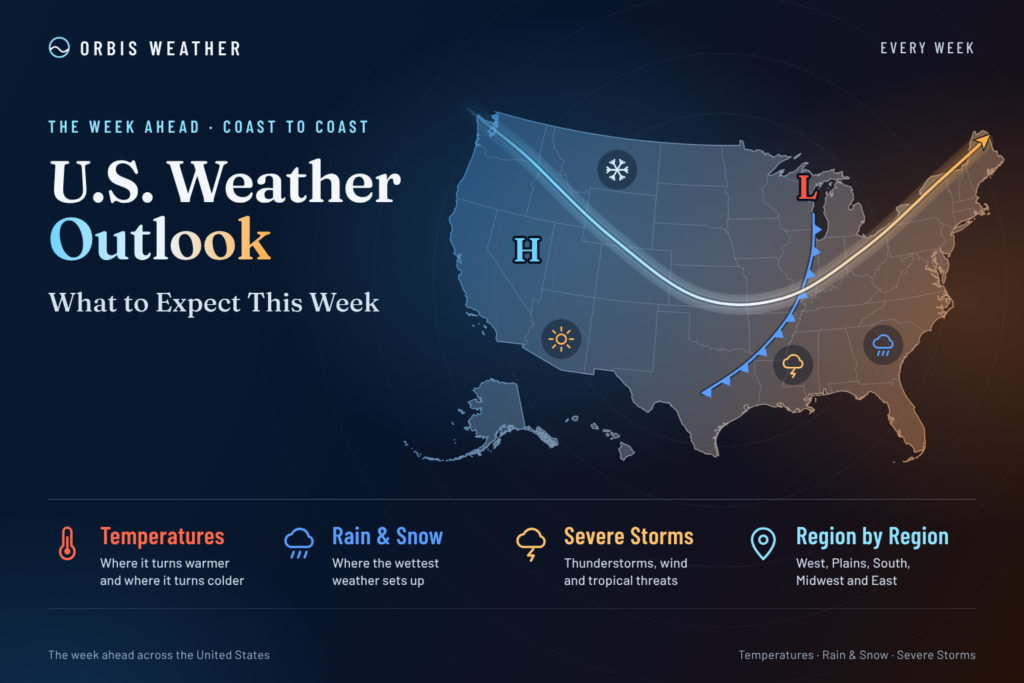
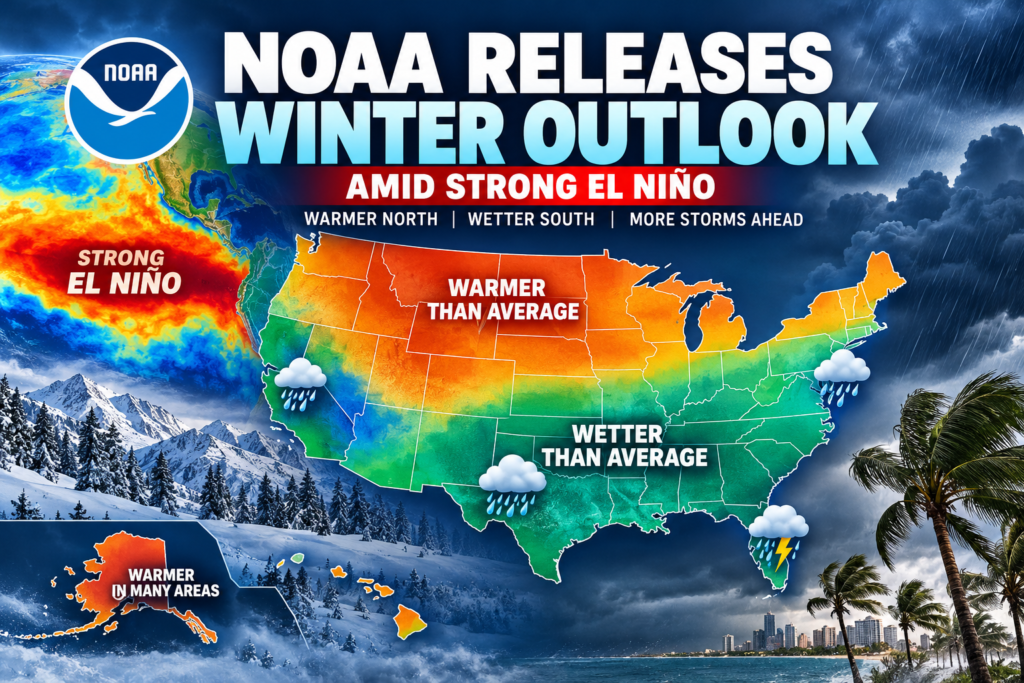
A powerful El Niño is expected to reshape weather patterns across the United States this winter, bringing warmer conditions to much of the North, increased rainfall across the South and East, and the potential for flooding, severe storms and significant winter weather.
The National Oceanic and Atmospheric Administration (NOAA) released its official 2026–2027 U.S. Winter Outlook on Thursday, covering December 2026 through February 2027.
Forecasters say a very strong El Niño will be one of the dominant influences on the coming winter, potentially shifting the jet stream southward and increasing storm activity across the southern United States.
🌡️ Warmer North, Wetter South: What NOAA Predicts
NOAA’s winter outlook identifies several major regional trends.
Region | Winter 2026–27 outlook |
|---|---|
Pacific Northwest | Warmer than average; some areas drier |
Northern Rockies | Warmer, with increased drought concerns |
Midwest | Warmer than average |
Great Lakes | Warmer; some areas drier |
Northeast | Warmer, with wetter conditions favored along the coast |
Southern California and Southwest | Increased chances of precipitation |
Texas and Gulf Coast | Wetter than average |
Florida and Southeast | Near-normal temperatures favored in parts; wetter conditions likely |
Alaska | Warmer in many areas, with some regions drier |
🌊 El Niño Could Become Historically Strong
El Niño occurs when ocean temperatures in the central and eastern equatorial Pacific become unusually warm, disrupting atmospheric circulation and changing weather patterns around the globe.
NOAA reports that El Niño has continued strengthening, with a strong-to-very-strong event likely to persist into early 2027.
A particularly powerful El Niño can shift the Pacific jet stream farther south, steering additional storm systems across California, the southern Plains, Gulf Coast and southeastern United States.
The effects are not identical every winter, but stronger El Niño events generally increase confidence in certain large-scale weather patterns.
🌧️ Southern States Face Increased Rainfall and Flooding Risks
One of NOAA’s most important findings is the elevated probability of wetter-than-average conditions across the southern United States.
This includes California, Arizona, New Mexico, Texas, Louisiana, Mississippi, Alabama, Georgia and Florida.
Potential impacts include:
🌧️ More frequent periods of heavy rainfall.
🌊 Increased flash-flooding risks during intense storms.
⛈️ Strong thunderstorms and possible severe-weather outbreaks.
🏔️ Heavy mountain snowfall in parts of the Southwest.
💧 Improvement in drought conditions across several southern regions.
NOAA cautions that heavy precipitation over drought-affected landscapes can also create dangerous flooding and mudslides.
❄️ What About Snowstorms?
Although the overall winter outlook favors warmer conditions across much of the northern United States, that does not mean snowstorms will disappear.
Major winter storms remain possible across the Rockies, Midwest, Great Lakes and Northeast.
During strong El Niño winters, snowfall patterns can shift, sometimes favoring the southern Rockies and parts of the southern United States while reducing seasonal snowfall across some northern areas.
However, NOAA’s seasonal outlook does not predict specific snowstorms or total winter snowfall accumulations. Those forecasts require shorter-range weather models and observations.
🌴 What Does This Mean for Florida?
Florida could experience a wetter and more unsettled winter than usual.
The state’s position along the southern storm track makes it particularly sensitive to strong El Niño events.
Potential implications include increased rainfall, more frequent frontal systems, and occasional severe thunderstorms.
Southwest Florida communities, including Naples, Marco Island, Fort Myers and Cape Coral, should be prepared for periods of heavy rain and changing marine conditions.
NOAA favors near-normal seasonal temperatures for parts of Florida, meaning the state may still experience both warm spells and occasional cold fronts.
A wetter seasonal outlook does not guarantee that every week will be rainy, nor does it establish the timing or severity of individual storms.
🚨 NOAA Introduces New Winter Weather Warning Tools
NOAA is also introducing improvements to its winter forecasting and warning systems.
The National Weather Service’s Probabilistic Precipitation Portal provides estimates of potential snowfall, freezing rain and rainfall amounts, along with probabilities of exceeding specific thresholds.
Forecasters will also begin using “Particularly Dangerous Situation” wording for select Blizzard Warnings and Ice Storm Warnings when exceptionally severe conditions are expected.
These enhancements are designed to help communities prepare for dangerous weather before it arrives.
🔎 When Will NOAA Update Its Winter Forecast?
NOAA will continue monitoring El Niño and updating its seasonal forecasts as winter approaches.
The next monthly winter outlook update is scheduled for November 19, 2026.
Long-range forecasts describe probabilities rather than certainties. Short-term weather systems, atmospheric circulation changes and Arctic outbreaks can still produce significant departures from the seasonal outlook.
🌎 Orbis Weather: The Bottom Line
The winter of 2026–2027 could look very different across the United States.
Northern regions are favored to experience warmer-than-average conditions, while southern states face increased chances of rain and stormy weather.
For Florida and the Gulf Coast, the most important concern may be the potential for a wetter winter accompanied by occasional severe thunderstorms.
As El Niño continues strengthening, NOAA’s forecast suggests that flooding, storm tracks and regional precipitation extremes could become major weather stories this winter.