
Historic Flooding Devastates Four Corners Region as Evacuations, Rooftop Rescues and Emergency Declarations Spread Across U.S. Southwest
By Paul Harrison | Founder & Publisher, Orbis Weather




Historic Flooding Devastates Four Corners Region as Evacuations, Rooftop Rescues and Emergency Declarations Spread Across U.S. Southwest
By Paul Harrison | Orbis Weather
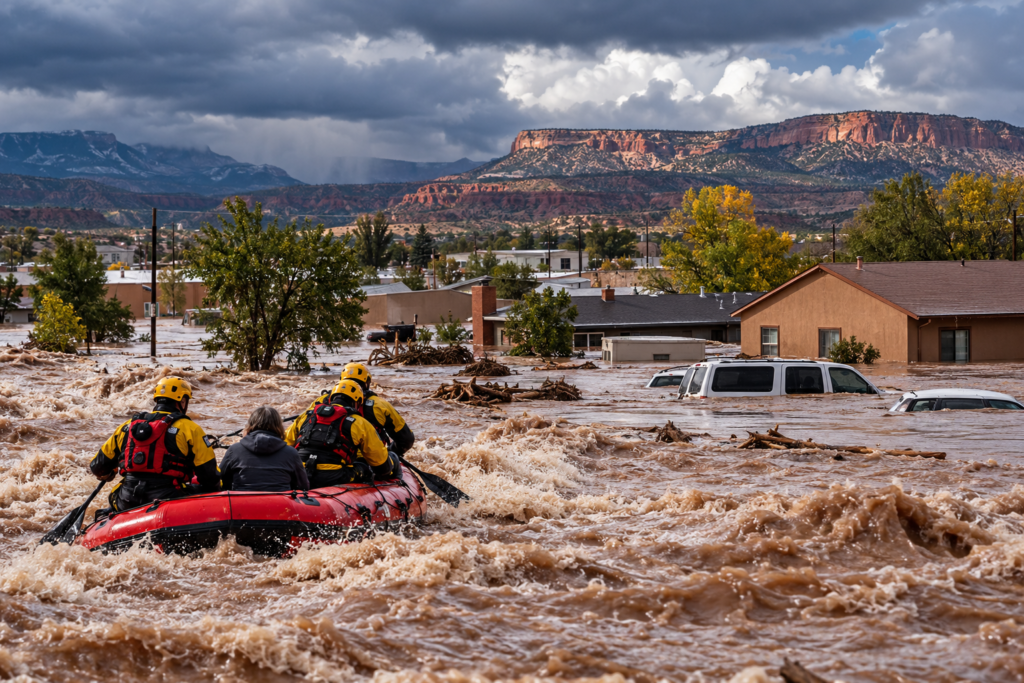
Historic flooding has swept across the Four Corners region of the southwestern United States, forcing hundreds of residents to evacuate, damaging homes and infrastructure, disrupting wastewater systems, and triggering emergency declarations across several states.
The flooding intensified on Thursday and Friday, October 22–23, 2026, after repeated rounds of heavy rainfall overwhelmed already saturated ground across parts of New Mexico, Colorado, Utah and Arizona.
By Saturday, October 24, emergency crews were still responding to flooded communities, with dangerous river conditions, blocked roads and infrastructure damage complicating recovery efforts.
The disaster has been particularly severe along the San Juan and Animas rivers, where rapidly rising water inundated residential neighborhoods and required specialized rescue operations.
New Mexico: Hundreds Ordered to Evacuate as Rivers Overflow
Some of the most serious flooding has occurred around Farmington and San Juan County in northwestern New Mexico.
Approximately 600 households were ordered to evacuate as the San Juan and Animas rivers rose to dangerous levels. Floodwaters entered homes, isolated neighborhoods and left residents stranded.
Emergency responders deployed boats, helicopters and specialized vehicles to rescue people trapped by rising water. Some residents required rooftop rescues as flooding made normal evacuation routes impassable.
The flooding also disrupted wastewater operations, with sewage entering the San Juan River, creating additional environmental and public-health concerns.
Farmington Police Chief Steve Hebbe described the situation as an extraordinary emergency, warning residents not to underestimate the danger.
Colorado: Rivers Reach Dangerous Levels, National Guard Deployed
Southwestern Colorado experienced extensive flooding as swollen rivers spilled into communities, roads and low-lying properties.
The Pagosa Springs area was particularly hard hit, with mandatory evacuations issued along the San Juan, Rio Blanco, Navajo and Piedra rivers.
Officials reported that flooding exceeded earlier forecasts, with the San Juan River rising approximately three feet above the level associated with a major flood the previous year.
Colorado Governor Jared Polis declared disaster emergencies in 11 counties and authorized National Guard assistance.
National Guard personnel rescued two people and three dogs from a submerged recreational vehicle.
In South Fork, floodwaters submerged vehicles and prompted warnings about impassable roads. Emergency officials urged residents to avoid unnecessary travel, even in locations where water levels had begun to fall.
Utah: Homes and RV Parks Swamped by Muddy Floodwater
In Hurricane, Utah, powerful floodwaters swept through residential areas, prompting a local state of emergency.
Initial reports indicated that approximately 80 homes and 50 recreational vehicles were affected as muddy water surged through neighborhoods and an RV park.
Vehicles were partially submerged, debris filled streets, and residents scrambled to protect animals and property.
The flooding followed earlier destructive rainfall in the area, highlighting the cumulative effects of repeated storms.
Although some floodwaters began receding, residents faced extensive cleanup and damage assessments.
Arizona and Navajo Nation: Families Rescued as Storms Batter Communities
The flooding also affected communities across northeastern Arizona, including parts of the Navajo Nation.
In Dennehotso, emergency teams rescued seven families, totaling 30 people, from flooded homes. Specialized all-terrain rescue equipment was used to reach affected residents.
The Hopi Tribe declared a state of emergency following heavy rainfall that damaged roads, bridges, homes and other infrastructure.
Earlier in the week, severe thunderstorms and suspected tornadoes damaged buildings, uprooted trees and knocked down power lines in central and northern Arizona.
The combination of flash flooding, severe winds and damaged transportation routes created a complicated emergency response across the region.
Why Is the Southwest Experiencing Such Extreme Flooding?
Meteorologists point to an unusual combination of persistent rainfall, saturated soils and moisture associated with Pacific tropical weather systems.
Following a dry summer, the region experienced repeated periods of heavy rainfall during September and October.
By the time the latest storm system arrived, much of the ground was already saturated, reducing its ability to absorb additional rainfall.
According to the National Weather Service, some affected areas received approximately four inches (102 mm) of rain beginning Wednesday, October 21, while rainfall around Pagosa Springs exceeded five inches (127 mm).
In mountainous terrain, rainwater can rapidly flow downhill into rivers, washes and narrow valleys. These conditions can produce dangerous flash floods even after rainfall has stopped locally.
The situation demonstrates how successive storms can create a cumulative flooding disaster, particularly in normally dry landscapes.
Wastewater Disruptions Raise Environmental Concerns
Beyond the immediate threat to homes and roads, the flooding has affected wastewater infrastructure.
In San Juan County, New Mexico, flood-related wastewater problems resulted in sewage entering the San Juan River, according to reporting by NPR.
Such incidents can introduce bacteria and other contaminants into waterways, creating potential risks for downstream communities, livestock and recreational users.
Residents should avoid contact with potentially contaminated floodwater and follow local drinking-water advisories. A wastewater release does not automatically mean that treated drinking water is unsafe, but testing and official guidance are important.
Latest Outlook: Flooding Could Continue Through the Weekend
Although rainfall had temporarily eased in some locations by Friday, October 23, officials warned that river levels could remain dangerous.
Additional rainfall was forecast into the weekend, including parts of northwestern New Mexico and southeastern Utah.
Even relatively modest rainfall totals could worsen flooding because soils remain saturated and rivers are already carrying unusually high volumes of water.
Residents should remain alert for renewed flood warnings, delayed river crests, damaged bridges and roads that may appear passable but have been weakened by floodwater.
Flood Safety: What Residents Should Know
Emergency officials recommend the following precautions:
-
Follow evacuation orders immediately.
-
Never drive through flooded roads or around barricades.
-
Stay away from fast-moving rivers, drainage channels and bridges.
-
Avoid contact with floodwater that may contain sewage or hazardous debris.
-
Keep phones charged and emergency supplies accessible.
-
Monitor official National Weather Service alerts and local emergency management announcements.
A Major Natural Disaster for the American Southwest
The October 2026 Four Corners flooding is another reminder that some of the most dangerous floods can occur in regions better known for drought and desert conditions.
From flooded neighborhoods in Farmington to emergency rescues in Colorado, damaged homes in Utah and evacuations across the Navajo Nation, the disaster has affected communities across a vast area.
As emergency crews continue assessing the damage, the full economic and environmental consequences remain uncertain.
For residents, the immediate priorities are safety, access to essential services and recovery from the flooding.
Orbis Weather will continue following developments across the Four Corners region as additional damage assessments, river observations and emergency updates become available.
About the Author
Paul Harrison — Founder & Publisher, Orbis Weather
Paul Harrison founded Orbis Weather in 2026 to make global weather and natural-hazard information easier to find, follow and understand. His coverage includes tropical cyclones, severe weather, extreme temperatures, earthquakes, volcanoes, wildfires, flooding and significant natural disasters worldwide.
View all articles by Paul Harrison → | Editorial Standards →
Global Weather Tracker Hub
Explore weather maps, tropical systems, storms and natural hazards around the world.
No matching trackers found.