Is history about to repeat itself? And this time, could it be far worse?
In 1877, a climate phenomenon born deep in the Pacific Ocean did something extraordinary. It didn’t just break weather records—it shattered global stability.
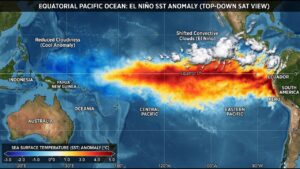
What scientists now call the “Super El Niño” drove sea surface temperatures up by a staggering 3.5 degrees Celsius. The result? The monsoons didn’t just stall; they vanished. Drought ripped across Asia, Africa, and South America, triggering widespread crop failures and a global famine that claimed an estimated 50 million lives—nearly four percent of the world’s entire population at the time.
It remains, by any metric, the single deadliest environmental disaster in human history.
Which brings us to the present day.
Now, climate scientists are warning that while our technology and food networks have evolved, the underlying threat hasn’t. In fact, the baseline has shifted dramatically.
Here is why today’s Super El Niños carry an even greater risk:
The Global Heat Baseline: Unlike in 1877, modern El Niños are playing out against a backdrop of human-induced global warming. When a Super El Niño stacks on top of already record-breaking global temperatures, atmospheric instability reaches dangerous new territory.
Compound Climate Shockwaves: Modern models show these events now trigger far more extreme teleconnections—concentrating multi-year droughts in crucial agricultural basins like the Amazon and Southeast Asia, while simultaneously unleashing unprecedented flooding elsewhere.
Ecological Tipping Points: We aren’t just looking at crop stress. A modern Super El Niño threatens to push critical ecosystems past the point of no return—from catastrophic, irreversible coral reef die-offs to massive peatland fires releasing gigatons of stored carbon back into the atmosphere.
In 1877, humanity was caught unprepared by a natural disaster. Today, as global temperatures continue to rise, the question isn’t whether another Super El Niño is coming—it is whether our modern systems are built to withstand a climate event operating on an unprecedented scale.