
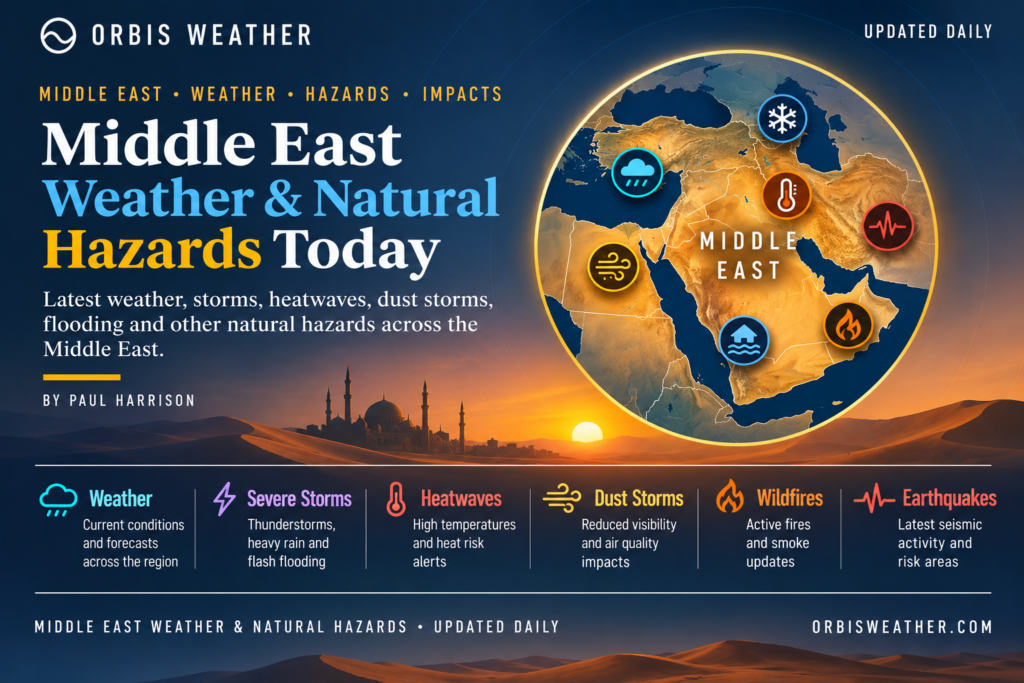
🌍 Middle East Weather & Natural Hazards Today

- Flooding in Aceh Spurs Warnings as Severe Weather Threatens 9:09 AM
- North America Weather & Natural Hazards Today – November 15, 2026 8:57 AM
- Central America Weather & Natural Hazards Today – Sunday, November 15, 2026 8:49 AM
- South America Weather & Natural Hazards Today – November 15, 2026 8:41 AM
- Weekly Earth Watch: Volcanoes, Earthquakes & Natural Hazards – Week ending November 15, 2026 8:29 AM
- Daily Earthquakes, Storms, Fires & Floods Report November 15, 2026 8:21 AM
- Australian Region Tropical Weather Update: Sunday, November 15, 2026 8:14 AM
- Southwest Indian Ocean Tropical Weather Update: Sunday, November 15, 2026 8:06 AM
- WESTERN PACIFIC Tropical Weather Update – November 15, 2026 7:57 AM





Middle East Weather & Natural Hazards Today – November 14, 2026
Saudi Arabia Faces Final Day of Multi-Day Storm Warnings as Flash Flood Threats, Strong Winds and Recent Flood Damage Keep the Middle East on Alert
By Paul Harrison | Orbis Weather | Saturday, November 14, 2026
Middle East Weather Overview
The Middle East enters Saturday, November 14, with severe thunderstorms and flash flooding remaining the principal weather concerns across parts of Saudi Arabia, while recent flooding in Iran and unsettled conditions elsewhere in the Arabian Peninsula highlight the region’s vulnerability to sudden weather emergencies.
Saudi Arabia’s multi-day severe-weather warnings extend through November 14, with western and southwestern regions particularly exposed to heavy downpours, hail, strong winds and dangerous runoff.
Elsewhere, Iraq and Iran are dealing with the consequences of recent severe weather, while the United Arab Emirates, Qatar and Oman require continued monitoring for changing winds, rainfall and marine conditions.
Across the eastern Mediterranean, the seasonal transition toward winter is bringing greater attention to rainfall, colder mountain conditions and the vulnerability of communities affected by damaged infrastructure.
The three principal concerns for Saturday are:
Saudi Arabia: The final scheduled day of a multi-day storm warning period, with flash flooding the principal danger.
Iran: Recovery following deadly flooding and severe weather reported earlier in November.
Arabian Gulf: Changing wind, visibility and marine conditions requiring attention from travelers and coastal communities.
This report distinguishes verified recent events and forecasts from seasonal hazards. Not every country mentioned is experiencing an active severe-weather emergency.
1. Saudi Arabia – Heavy Thunderstorms and Flash Flood Threat
Saudi Arabia remains the Middle East’s most significant recently documented severe-weather concern.
Warnings issued by the country’s Civil Defense authorities earlier this week covered parts of seven regions, with the severe-weather period extending through Saturday, November 14.
The affected regions included Riyadh, Makkah, Madinah, Asir, Jazan, Hail and Qassim.
More detailed forecasts issued November 12 highlighted moderate to heavy thunderstorms across Jazan, Asir, Al-Baha and Makkah, including the possibility of hail, strong winds and flash flooding.
Areas requiring particular attention
Jazan: Intense rainfall may produce rapid runoff in valleys and low-lying areas, particularly near mountainous terrain.
Asir: Mountain communities face elevated flash-flood vulnerability when thunderstorms generate heavy rainfall over steep catchments.
Al-Baha: Strong thunderstorms may bring hazardous driving conditions, reduced visibility and localized flooding.
Makkah: Heavy rainfall, hail and gusty winds could create dangerous conditions on roads and in normally dry drainage channels.
Riyadh, Madinah, Hail and Qassim: These regions were included in the broader warning period, although Saturday’s precise district-level alert status requires confirmation from updated official bulletins.
Saturday’s outlook
The previously announced severe-weather period extends through November 14. However, this does not establish that every affected district will experience thunderstorms throughout Saturday.
The greatest concern is sudden flooding in wadis, where heavy rainfall upstream can create dangerous conditions even when skies appear relatively clear locally.
Residents should monitor the Saudi National Center for Meteorology and Civil Defense for updated warnings before traveling.
Orbis Weather assessment: Elevated concern within the documented multi-day storm period, particularly in western and southwestern Saudi Arabia. Current warning levels should be verified locally.
2. Iran – Deadly Flooding Leaves Communities Vulnerable
Iran continues to face recovery challenges following severe weather earlier this month.
On November 8, Iranian officials reported that flooding and severe weather had killed four people, injured 11 others and disrupted access to approximately 190 villages.
Emergency response teams were deployed to affected communities as authorities assessed damage and worked to restore access.
Continuing natural hazards
Flooding can create significant secondary dangers after the heaviest rainfall has ended.
Damaged bridges, unstable roads, landslides and contaminated water supplies can prolong the emergency for isolated communities.
Mountainous regions are particularly vulnerable because runoff can move rapidly through steep valleys.
As November progresses, colder weather and the possibility of snowfall at higher elevations introduce additional risks for transport and emergency operations.
Earthquake monitoring
Iran also lies within one of the world’s more seismically active regions, where the Arabian and Eurasian tectonic plates interact.
Earthquake activity is a continuing natural hazard, but no specific new significant earthquake is being reported here without verified seismic data.
Orbis Weather assessment: Recovery from confirmed recent flooding remains important. A new nationwide flood emergency for November 14 has not been independently established.
3. United Arab Emirates – Rainfall, Wind and Marine Hazards
The United Arab Emirates has experienced an unsettled weather pattern during the preceding days, with recent forecasts highlighting convective cloud development, showers and periods of stronger winds.
Northern and eastern areas, including Fujairah, Ras Al Khaimah and parts of Sharjah, are particularly sensitive to heavy rainfall and runoff from the Hajar Mountains.
Dubai and Abu Dhabi can also experience localized road flooding when intense showers overwhelm urban drainage systems.
Hazards to monitor
Rainfall: Localized heavy showers may create standing water and hazardous road conditions.
Strong winds: Gusty conditions can generate blowing dust and sudden reductions in visibility.
Marine conditions: Stronger winds can produce rough seas in the Arabian Gulf and Sea of Oman.
Mountain runoff: Intense rainfall over elevated terrain may generate rapid flooding in downstream valleys.
These hazards reflect the recent unsettled pattern and the country’s geographical exposure. A new nationwide severe-weather warning for Saturday has not been independently confirmed.
Residents should consult the UAE National Centre of Meteorology for the latest forecasts, radar and marine advisories.
4. Qatar – Strong Winds and Rough Seas Into the Weekend
Qatar’s recent multi-day weather outlook identified strong northwesterly winds, scattered rainfall and the possibility of thunderstorms through Saturday, November 14.
The forecast highlighted offshore conditions as a particular concern, with stronger winds capable of producing rough seas and reduced visibility.
Small vessels, fishing boats and recreational marine operators should pay close attention to updated offshore forecasts.
Saturday’s main concerns
Strong winds may affect exposed coastal areas, while blowing dust could reduce visibility on inland roads.
Any thunderstorms developing over coastal waters could create rapidly changing marine conditions.
The previously reported forecast period includes Saturday, but exact wind speeds and sea conditions at individual locations should be confirmed using current Qatar Meteorology Department information.
5. Iraq – Flood Recovery and Rainfall Monitoring
Iraq remains vulnerable following reports of damaging rainfall and flooding earlier in November.
Heavy downpours can overwhelm drainage systems in urban districts and cause rapid runoff across agricultural and low-lying areas.
Communities affected by previous flooding may face continued disruption from damaged roads, standing water and weakened infrastructure.
Areas of concern
Baghdad and other major urban centers can experience localized flooding during intense rainfall.
Northern mountainous districts face additional risks from steep terrain, unstable slopes and deteriorating road conditions.
Southern Iraq may experience drainage problems where heavy rainfall accumulates across flat terrain.
Saturday’s assessment: Recent flooding warrants continued monitoring, but no new nationwide flash-flood warning for November 14 has been independently confirmed.
6. Oman – Wadi Flooding and Mountain Weather
Oman remains particularly vulnerable to flash flooding whenever heavy thunderstorms develop over its mountainous northern regions.
The Hajar Mountains can channel intense rainfall into narrow valleys and normally dry riverbeds, known locally as wadis.
Even relatively short periods of heavy rain can produce dangerous runoff.
Areas to monitor
Muscat, Sohar, Nizwa and surrounding mountain communities should monitor local forecasts whenever thunderstorms are expected.
The principal natural hazards include sudden wadi flooding, reduced visibility on mountain roads, rockfalls and hazardous marine conditions during stronger wind events.
No new nationwide severe-weather warning for Saturday, November 14, has been independently verified.
Orbis Weather assessment: Routine monitoring of mountain rainfall and coastal conditions remains appropriate. Flooding should not be considered an active emergency without location-specific warnings or reports.
7. Israel and Palestine – Autumn Rainfall and Flood Vulnerability
The eastern Mediterranean is entering its wetter season, bringing an increasing likelihood of rain-bearing weather systems and cooler nighttime temperatures.
In Israel and the Palestinian territories, heavy rainfall can produce localized urban flooding and rapid runoff through desert drainage channels.
Gaza – Humanitarian Weather Concerns
Weather conditions remain particularly important in Gaza, where damaged buildings, disrupted drainage systems and vulnerable temporary accommodation can increase the consequences of rainfall.
Even moderate rain can create serious difficulties where shelter and sanitation infrastructure are inadequate.
Potential hazards include flooded shelters, contaminated standing water, muddy access routes and increased exposure to cold weather.
These are continuing vulnerabilities rather than confirmation of a new widespread flood emergency on November 14.
8. Lebanon – Mountain Rainfall and Landslide Risk
Lebanon is moving further into its autumn and winter rainfall season.
Mediterranean weather systems can produce heavy rain along the coast and colder conditions across the country’s mountainous interior.
Beirut, Tripoli and Sidon may experience localized drainage problems during intense downpours, while higher elevations are vulnerable to fog, poor visibility and unstable slopes.
Mountain roads become increasingly hazardous as temperatures fall and wetter conditions develop.
No specific nationwide severe-weather warning for Saturday has been independently confirmed.
9. Jordan – Flash Flood Hazards in Desert Valleys
Jordan’s geography makes flash flooding one of the country’s most dangerous weather-related hazards.
Locations such as Petra, Wadi Rum and the Dead Sea region contain narrow valleys and drainage channels capable of carrying sudden floodwater.
Rainfall does not need to occur directly above a valley to create a dangerous flood. Storms farther upstream can send runoff into areas that appear dry.
Visitors should avoid entering narrow canyons whenever heavy rainfall is forecast within the surrounding catchment.
Saturday’s assessment: Seasonal flash-flood vulnerability remains significant, although no new nationwide warning has been independently established.
10. Syria – Rainfall, Colder Conditions and Displacement Risks
Syria faces growing seasonal weather challenges as November progresses.
Rain-bearing systems moving inland from the Mediterranean can affect western and northern districts, while higher elevations become increasingly susceptible to colder conditions.
For communities living in damaged buildings or temporary shelters, rainfall and falling temperatures can create additional hardship.
The principal hazards include localized flooding, muddy roads, unstable slopes and exposure to cold weather.
No new nationwide weather emergency for November 14 has been independently verified.
11. Yemen – Flash Floods and Vulnerable Infrastructure
Yemen remains highly exposed to natural hazards because of its mountainous terrain and fragile infrastructure.
When thunderstorms develop over elevated regions, rainfall can rapidly enter valleys and drainage channels.
Flooding and landslides can isolate rural communities and disrupt access to essential services.
Damaged roads and bridges can also complicate emergency response.
These are established vulnerabilities rather than confirmation of a newly developing nationwide flood disaster on Saturday.
12. Kuwait and Bahrain – Dust, Winds and Marine Conditions
Kuwait and Bahrain are entering a cooler seasonal period when changing pressure patterns can bring stronger winds, blowing dust and fluctuating visibility.
In Kuwait, stronger winds may reduce visibility across desert highways.
Bahrain’s coastal location makes marine conditions particularly important during periods of stronger northwesterly winds.
Small-vessel operators should check local forecasts before departure.
No new widespread severe-weather warning for either country on November 14 has been independently verified.
13. Middle East Natural Hazards Summary – November 14
Country or region | Main concern | Current assessment |
|---|---|---|
Saudi Arabia | Heavy thunderstorms, flash floods | Multi-day warning period through Saturday |
Iran | Recent deadly floods | Recovery and monitoring |
UAE | Strong winds, dust, rough seas | Saturday forecast available |
Qatar | Offshore winds, high seas | Saturday forecast available |
Iraq | Recent flooding | Recovery and monitoring |
Oman | Wadi flooding | Conditional hazard |
Israel and Palestine | Seasonal rain, flooding | Monitoring |
Lebanon | Rain, mountain conditions | Seasonal monitoring |
Jordan | Desert flash flooding | Seasonal monitoring |
Syria | Rain, colder weather | Humanitarian vulnerability |
Yemen | Flooding and landslides | Ongoing vulnerability |
Kuwait and Bahrain | Dust and marine conditions | Seasonal monitoring |
These assessments are editorial summaries, not official government warning levels. Recent weather events and seasonal vulnerabilities are distinguished from confirmed Saturday forecasts.
14. Why Flash Flooding Is So Dangerous in the Middle East
Flash flooding presents a particularly serious danger across the Middle East because intense rainfall can fall over landscapes that remain dry for much of the year.
In mountainous and desert regions, rainwater may run rapidly across hard ground and into narrow valleys.
Some wadis can fill within minutes, creating dangerous conditions for motorists, hikers and communities downstream.
Urban flooding presents a different challenge. Heavy rainfall can overwhelm drainage systems, particularly where infrastructure has been damaged or was not designed for intense storms.
As cooler air begins interacting with warm, moisture-rich air during the autumn transition, thunderstorms can develop rapidly.
However, seasonal atmospheric conditions alone cannot establish that severe weather will occur at a particular location on a particular day.
15. Weather Safety Advice for Saturday
Residents and travelers across the region should take particular care where official warnings remain in force.
Never drive through floodwater or attempt to cross a flowing wadi.
Avoid camping in dry riverbeds when thunderstorms are forecast upstream.
Check road conditions before traveling through mountainous districts.
Reduce driving speed during blowing dust, heavy rain and fog.
Secure loose outdoor objects ahead of strong winds.
Check marine forecasts before fishing or taking small boats offshore.
Follow official emergency instructions and evacuation orders.
Flash flooding can occur with very little warning, and water flowing across roads may conceal substantial damage beneath the surface.
16. Official Weather and Natural Hazard Sources
Orbis Weather recommends the following sources for current forecasts, emergency warnings and disaster information.
Organization | Information |
|---|---|
Saudi forecasts and warnings | |
Weather, radar and marine bulletins | |
Weather forecasts and warnings | |
Weather and marine forecasts | |
Earthquake monitoring | |
International meteorological information | |
Humanitarian emergencies and disaster impacts |
Recent reporting and verification
This edition also draws on published reporting and forecast information from November 8–13, including:
Saudi Gazette, November 12: Severe thunderstorm and flash-flood forecasts for western and southwestern Saudi Arabia.
Saudi GazetteUAE National Centre of Meteorology: Five-day forecast issued November 11, including Saturday’s wind and marine conditions.
11-11-2026Gulf Times, November 11: Qatar’s five-day outlook, including strong offshore winds through Saturday.
Gulf TimesIran International, November 8: Reported casualties and disruption from flooding across Iran.
Iran International | Iran International
17. Orbis Weather Final Outlook – Saturday, November 14, 2026
Saudi Arabia remains the principal focus of the Middle East’s severe-weather outlook as the previously announced multi-day warning period reaches its final scheduled day.
Heavy thunderstorms, hail and flash flooding remain the hazards of greatest concern in areas covered by continuing warnings, particularly across the country’s western and southwestern regions.
In the United Arab Emirates, the official forecast for Saturday calls for partly cloudy skies, northwesterly to southwesterly winds reaching approximately 45 km/h (28 mph), blowing dust in exposed areas and rough conditions in the Arabian Gulf.
Qatar’s forecast indicates a gradual improvement in inland weather, with Saturday temperatures around 23–28°C (73–82°F). Offshore winds and high seas remain concerns, even as inland conditions become more stable.
Iran continues to face recovery challenges following deadly flooding earlier this month, while Iraq and other vulnerable countries must remain prepared for further rainfall during the seasonal transition.
Across the eastern Mediterranean, the approach of winter places greater importance on monitoring rainfall, mountain weather and conditions affecting displaced communities.
The main message for Saturday is clear: take flash-flood warnings seriously, avoid flooded roads and wadis, and monitor official marine forecasts before offshore travel.
Weather conditions can change rapidly, particularly where thunderstorms develop over mountainous terrain.
Editorial Methodology, Sources and Verification
Published for: Saturday, November 14, 2026, Middle East local date
Author: Paul Harrison
Publisher: Orbis Weather
Coverage: Middle East weather, severe storms, flooding, marine hazards, earthquake monitoring and natural-disaster risks.
This independent regional report combines recently published meteorological forecasts, documented severe-weather events, official warning information and established geographical knowledge of natural hazards.
The November 14 outlook is based on information available through November 13. Forecasts specifically covering Saturday have been distinguished from earlier events and general seasonal risks.
Where no current event-specific warning could be independently verified, the article identifies the hazard as a monitoring concern rather than an active emergency.
No unverified rainfall totals, earthquake magnitudes, casualty figures or disaster declarations have been presented as confirmed Saturday events.
Orbis Weather provides independent weather journalism and natural-hazards reporting. This article is not a substitute for official meteorological forecasts, emergency warnings or instructions from local authorities.
Orbis Weather — Tracking the World’s Weather and Natural Hazards
About the Author
Paul Harrison — Founder & Publisher, Orbis Weather
Paul Harrison founded Orbis Weather in 2026 to make global weather and natural-hazard information easier to find, follow and understand. His coverage includes tropical cyclones, severe weather, extreme temperatures, earthquakes, volcanoes, wildfires, flooding and significant natural disasters worldwide.
View all articles by Paul Harrison → | Editorial Standards →
Global Weather Tracker Hub
Explore weather maps, tropical systems, storms and natural hazards around the world.
No matching trackers found.