
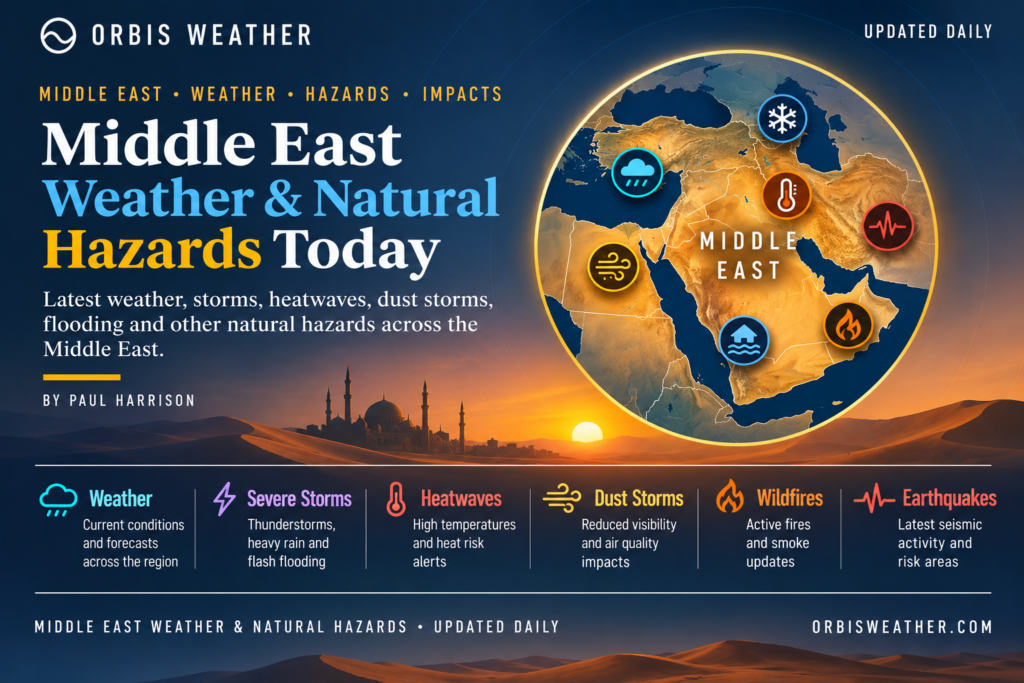
🌍 Middle East Weather & Natural Hazards Today

- Europe Weather & Natural Hazards Today – Friday, November 13, 2026 7:18 PM
- Southeast Asia Earthquakes This Week: Friday, November 13, 2026 7:09 PM
- Southeast Asia Weather & Natural Hazards Today: Friday, November 13, 2026 6:58 PM
- Africa Weather & Natural Hazards Today — Friday, November 13, 2026 6:35 PM
- Middle East Weather & Natural Hazards Today – November 13, 2026 4:07 PM
- America’s Hot Spots This Week November 12, 2026 3:17 PM
- Australian Region Tropical Weather Update — Friday, November 13, 2026 11:49 AM
- Southwest Indian Ocean Tropical Weather Update – Friday, November 13, 2026 11:40 AM
- Australia, New Zealand & Oceania Weather & Natural Hazards Today — Friday, November 13, 2026 11:16 AM
- Evacuation Alert Issued for Entire Village of Pemberton as Flood Risk Rises 10:36 AM
- North America Weather & Natural Hazards Today — November 12, 2026 9:49 AM
- Central America Weather & Natural Hazards Today – Thursday, November 12, 2026 9:35 AM
- South America Weather & Natural Hazards Today – Thursday, November 12, 2026 9:09 AM
- Daily Earthquakes, Storms, Fires & Floods Report — November 12, 2026 9:00 AM
- Weekly Global Climate Pulse: Thursday, November 12, 2026 8:50 AM
- Tropical Atlantic Daily Report: Thursday, November 12, 2026 7:26 AM
- Eastern & Central Pacific Tropical Weather Update: Thursday, November 12, 2026 7:18 AM
- Western Pacific Tropical Weather Update – November 12, 2026 7:10 AM





Middle East Weather & Natural Hazards Today – November 13, 2026
Saudi Arabia Faces Continuing Flash Flood Threat as Heavy Rain, Thunderstorms and Unsettled Weather Affect the Arabian Peninsula
By Paul Harrison | Orbis Weather | Friday, November 13, 2026
The Middle East enters Friday facing a significant period of unsettled weather, with Saudi Arabia at the center of a multi-day severe-weather threat and the United Arab Emirates also experiencing an unstable weather pattern.
Heavy thunderstorms, hail, strong winds and flash flooding remain the principal concerns across parts of the Arabian Peninsula. In Saudi Arabia, warnings issued earlier this week extend through Saturday, November 14, while recent forecasts in the UAE have highlighted rainfall, strong winds and potentially hazardous marine conditions.
Elsewhere, Iraq continues to recover from recent flooding, while countries across the eastern Mediterranean face increasing seasonal risks from rainfall, colder temperatures and localized flooding.
This Orbis Weather report examines the latest verified developments, natural hazards and regional conditions requiring attention on Friday, November 13.
Reporting note: This edition is dated Friday, November 13, in the Middle East. The latest specific forecasts available for verification were issued on November 12. Conditions and official warning levels may change during Friday.
1. Saudi Arabia – Heavy Rain, Hail and Flash Flood Threat Continues
Saudi Arabia remains the region’s most significant confirmed severe-weather concern heading into Friday.
The Saudi National Center for Meteorology has forecast several days of unsettled conditions, with Civil Defense warnings covering parts of the country through November 14.
The latest detailed forecast, issued Thursday, identified four southwestern and western regions facing moderate to heavy thunderstorms:
Jazan: Heavy downpours, thunderstorms, hail and strong winds.
Asir: Thunderstorms affecting mountainous communities, with possible flash flooding.
Al-Baha: Heavy rain, gusty winds and reduced visibility.
Makkah: Thunderstorms, hail, blowing dust and dangerous runoff.
Additional lighter or moderate rainfall was forecast for Madinah, Hail, Qassim, Riyadh and the Eastern Province, with fog possible across several northern and central districts.
What to watch on Friday
The broader severe-weather period continues through Saturday, but Thursday’s district-level forecasts should not automatically be treated as confirmed Friday conditions.
The most important hazards remain:
Flash flooding in valleys and normally dry riverbeds, known as wadis.
Dangerous driving conditions during heavy rainfall.
Hail and damaging thunderstorm wind gusts.
Reduced visibility from dust, rain and fog.
Rapid runoff in southwestern mountain communities.
Saudi Arabia’s mountainous southwest is especially vulnerable to sudden flooding because steep terrain can channel rainfall into valleys within minutes.
Orbis Weather assessment: Elevated concern for severe thunderstorms and flash flooding within the ongoing warning period. Residents should verify Friday’s district-specific warnings before traveling.
2. United Arab Emirates – Unsettled Weather, Rain and Rough Seas
The United Arab Emirates is also experiencing an unsettled weather pattern as low-pressure systems influence conditions across the country.
The UAE National Centre of Meteorology reported on Thursday that convective clouds could bring intermittent rainfall, locally heavy in some areas.
The greatest rainfall potential was identified across northern and eastern districts, including Fujairah, Ras Al Khaimah and parts of Sharjah.
Dubai and Abu Dhabi were also forecast to experience increased cloud cover and occasional showers.
Thursday’s forecast included coastal winds reaching approximately 55 km/h (34 mph), with rough to very rough seas possible in the Arabian Gulf and moderate to rough conditions in the Sea of Oman.
Friday’s principal concerns
Although a new Friday-specific forecast has not been independently confirmed, the recent unstable pattern makes the following hazards important to monitor:
Localized flooding: Heavy showers can overwhelm drainage systems and cause standing water on roads.
Strong winds and blowing dust: Sudden gusts can reduce visibility, particularly on highways and exposed desert routes.
Marine hazards: Small vessels may encounter difficult conditions when winds and wave heights increase.
Mountain runoff: Communities near the Hajar Mountains should remain alert to rapidly changing conditions during thunderstorms.
Residents should consult the UAE National Centre of Meteorology for the latest warnings and marine forecasts before traveling.
3. Oman – Mountain Flooding and Wadi Safety
Oman remains vulnerable to localized flash flooding whenever thunderstorms develop over its mountainous northern districts.
The Al Hajar Mountains, interior valleys and coastal drainage systems can experience rapid runoff following intense rainfall.
Areas requiring particular attention during unsettled weather include Muscat, Nizwa, Sohar and mountain communities.
The main natural hazards are flash flooding in wadis, slippery mountain roads, localized landslides and rough seas during stronger wind events.
No new nationwide severe-weather warning for Friday, November 13, has been independently verified for Oman in this report.
The principal message for residents and travelers is to avoid entering wadis during heavy rain, including when thunderstorms occur upstream rather than directly overhead.
4. Iraq – Flood Recovery and Further Rainfall Concerns
Iraq remains an important country to monitor following reports of serious flooding earlier in November.
Heavy rainfall can create dangerous conditions in urban districts, agricultural communities and areas with limited drainage infrastructure.
Floodwater may damage roads, disrupt transport and contaminate local water supplies.
Continuing hazards
Previously flooded communities may face lingering standing water, damaged roads and weakened infrastructure even after rainfall has ended.
Further heavy thunderstorms, should they develop, could increase the risk of renewed localized flooding.
However, the earlier flooding does not establish that another widespread storm is affecting Iraq on Friday.
Orbis Weather assessment: Flood recovery and renewed rainfall are the principal concerns. A fresh nationwide flash-flood warning for November 13 has not been independently confirmed.
5. Israel and Palestine – Seasonal Rainfall and Flood Vulnerability
The eastern Mediterranean is entering a wetter period as autumn progresses toward winter.
Rain-bearing weather systems can bring thunderstorms, gusty winds and cooler temperatures to Israel and the Palestinian territories.
Urban areas and coastal communities may experience localized flooding during intense rainfall.
Gaza – Weather and humanitarian concerns
Gaza faces particularly serious consequences from wet weather because damaged infrastructure, inadequate drainage and vulnerable temporary shelters can increase exposure to flooding.
Rainfall may cause water to enter shelters, worsen sanitation conditions and make already difficult living conditions more hazardous.
Cooler nighttime temperatures can also increase risks for people without adequate shelter.
These are continuing humanitarian vulnerabilities, not confirmation of a new widespread flood emergency on November 13.
6. Lebanon – Rainfall, Mountain Roads and Landslide Risks
Lebanon’s Mediterranean coastline and mountainous interior experience significant seasonal weather changes during November.
Rainfall can become more frequent, while temperatures decline across higher elevations.
The principal hazards during heavy rain include localized flooding in urban areas, landslides on unstable slopes, fog and poor visibility on mountain roads.
Communities in Beirut, Tripoli, Sidon and mountain districts should monitor official forecasts when rain-bearing systems approach.
No specific nationwide severe-weather alert for Friday has been independently verified in the available sources.
7. Jordan – Flash Flood Risks in Desert Valleys
Jordan’s landscape creates significant flash-flood hazards when heavy rainfall develops.
Steep valleys and narrow drainage channels can concentrate runoff rapidly, sometimes affecting areas where little rain has fallen locally.
Locations requiring particular care during severe weather include Petra, Wadi Rum, the Dead Sea region and other low-lying valleys.
Tourists and residents should avoid entering narrow canyons whenever thunderstorms are forecast within their drainage catchments.
This is a seasonal risk assessment rather than confirmation of an active Friday flood warning.
8. Syria – Rainfall, Flooding and Colder Weather
Syria faces increasing seasonal weather challenges as temperatures gradually decline toward winter.
Western and northern districts are particularly exposed to Mediterranean weather systems capable of producing heavy rainfall.
Flooding can become especially disruptive in areas where roads, drainage networks and residential buildings have been damaged.
For displaced communities living in temporary accommodation, wet and colder conditions may increase health and safety concerns.
The main hazards to monitor are localized flooding, unstable slopes, muddy roads and cold-weather exposure.
A new nationwide weather emergency for November 13 has not been independently confirmed.
9. Yemen – Mountain Flooding and Vulnerable Infrastructure
Yemen remains highly exposed to natural hazards because of its steep terrain, seasonal rainfall patterns and fragile infrastructure.
When intense thunderstorms develop, runoff can rapidly enter valleys and dry riverbeds, creating dangerous flash floods.
Mountain roads may become impassable, while landslides can isolate rural communities.
Weather-related damage can also disrupt humanitarian deliveries and access to essential services.
These are continuing vulnerabilities rather than evidence of a newly confirmed widespread flood emergency on Friday.
10. Iran – Mountain Weather and Earthquake Monitoring
Iran experiences considerable geographical differences in weather conditions.
Northern and western regions become increasingly susceptible to colder temperatures and unsettled weather during November, while central and southern desert districts generally remain drier.
Rain, snow and freezing conditions can affect higher elevations as winter approaches.
Earthquake risk
Iran also lies within an active tectonic region, making earthquake monitoring an important part of the country’s natural-hazard outlook.
Earthquakes can occur without warning, and scientists cannot reliably predict their exact date, time and location.
No new significant earthquake is being claimed for Iran in this report without verified seismic data.
Residents can monitor the USGS live earthquake map for confirmed activity.
11. Qatar – Strong Winds, Thunderstorms and Rough Seas
Qatar is another country facing a period of unsettled weather.
The Qatar Meteorology Department issued a five-day forecast on November 10 highlighting strong northwesterly winds, scattered rainfall and possible thunderstorms.
The forecast indicated that northwesterly winds could persist through Saturday, November 14.
Daytime temperatures were expected to range from approximately 23°C to 31°C (73°F to 88°F) during the forecast period.
Offshore conditions were a particular concern, with wave heights potentially reaching 12 feet (3.7 meters) during the most unsettled conditions.
Visibility could also deteriorate during thunderstorms.
Friday’s outlook
The continuing wind forecast makes marine conditions and exposed coastal locations important areas to monitor.
Small-vessel operators should check updated marine forecasts before departure.
Strong winds may also produce blowing dust and reduced visibility on roads.
12. Kuwait and Bahrain – Visibility, Wind and Marine Conditions
Kuwait and Bahrain are entering the cooler part of the year, when changing regional pressure patterns can produce periods of stronger winds and fluctuating visibility.
Potential hazards include blowing dust, occasional rain, early-morning mist and rough seas during stronger wind events.
Marine operators should pay particular attention to changing wind conditions across the Arabian Gulf.
No specific widespread severe-weather warning for either country on November 13 has been independently established in this report.
13. Middle East Natural Hazards Summary – November 13
The following assessments distinguish recently reported weather threats from seasonal or geographical vulnerabilities.
Country or region | Main hazard | Assessment |
|---|---|---|
Saudi Arabia | Thunderstorms, hail, flash floods | Elevated – multi-day warnings |
UAE | Rain, gusty winds, rough seas | Recent unsettled weather |
Qatar | Strong winds, thunderstorms, rough seas | Multi-day forecast |
Iraq | Recent flooding, further rainfall | Recovery and monitoring |
Oman | Mountain runoff, wadi flooding | Conditional risk |
Israel and Palestine | Rainfall, localized flooding | Seasonal monitoring |
Lebanon | Rainfall, landslides | Seasonal monitoring |
Jordan | Flash flooding in valleys | Seasonal monitoring |
Syria | Flooding, colder weather | Humanitarian vulnerability |
Yemen | Flash floods, landslides | Humanitarian vulnerability |
Iran | Mountain weather, earthquakes | Ongoing monitoring |
Kuwait and Bahrain | Dust, visibility, marine hazards | Seasonal monitoring |
These are Orbis Weather editorial assessments, not official national warning classifications. They should not be interpreted as confirmation of active warnings in every location.
14. Why November Weather Can Be Dangerous Across the Middle East
November marks an important seasonal transition across much of the region.
As cooler air begins interacting with warmer and more humid air masses, weather systems can produce periods of atmospheric instability.
Over the Arabian Peninsula, thunderstorms can occasionally generate intense rainfall over relatively small geographical areas.
In desert environments, the ground and drainage systems may struggle to absorb or carry away large quantities of water quickly.
The result can be sudden and dangerous flash flooding, even in places that receive relatively little annual rainfall.
Across the eastern Mediterranean, the arrival of the wetter season brings increasing opportunities for rain-bearing systems, mountain weather and localized flooding.
However, the precise location and severity of these events depend on individual weather systems. Seasonal patterns alone cannot establish that a particular location will experience dangerous conditions on Friday.
15. Safety Advice for Residents and Travelers
During periods of severe weather, residents and visitors should follow these precautions:
Never drive through flooded roads or flowing wadis.
Avoid valleys, canyons and low-lying campsites when thunderstorms are forecast upstream.
Reduce driving speed during heavy rain, fog and blowing dust.
Secure loose outdoor objects ahead of strong winds.
Check official marine warnings before taking small boats offshore.
Monitor local emergency announcements and evacuation instructions.
Keep essential medication, drinking water and emergency supplies available in flood-prone communities.
Floodwater can be deeper and faster-moving than it appears. Even shallow flowing water may be powerful enough to sweep vehicles from roads.
16. Official Weather and Natural Hazard Sources
Orbis Weather recommends the following official services for current forecasts, warnings and natural-hazard monitoring.
Organization | Information |
|---|---|
Saudi weather warnings and forecasts | |
UAE forecasts, radar and alerts | |
Oman forecasts and warnings | |
Qatar weather and marine forecasts | |
Verified global earthquake information | |
International meteorological information | |
Humanitarian emergencies and disaster impacts |
Recent reporting used for this edition also includes the November 12 Saudi Gazette forecast, Gulf News coverage of UAE weather conditions and Gulf Times reporting on Qatar’s multi-day outlook.
17. Orbis Weather Final Outlook – Friday, November 13, 2026
The principal weather concern across the Middle East remains the ongoing period of thunderstorms and flash-flood risk affecting Saudi Arabia.
Warnings covering the period through November 14 make western and southwestern parts of the country particularly important to monitor.
The UAE has also experienced unsettled weather, with recent forecasts identifying rainfall, strong winds and rough marine conditions.
Qatar’s multi-day forecast indicates that strong northwesterly winds may continue into the weekend, creating additional concerns for coastal and offshore activities.
Elsewhere, recent flooding in Iraq and the approaching winter rainfall season across the eastern Mediterranean underline the region’s continuing exposure to natural hazards.
The most important message for Friday is to remain alert to official warnings, avoid flooded roads and dry riverbeds during thunderstorms, and take marine weather advisories seriously.
Conditions can change quickly, particularly where thunderstorms develop over mountainous or desert terrain.
Editorial Methodology, Sources and Verification
Published for: Friday, November 13, 2026, Middle East local date
Author: Paul Harrison
Publisher: Orbis Weather
Coverage: Middle East weather, severe storms, flooding, marine hazards and geological risks
This regional report combines recent meteorological forecasts, reported official warnings and established geographical information about natural hazards.
The Saudi Arabian warnings, UAE unsettled-weather reports and Qatar wind forecasts are supported by reporting published November 10–12, 2026. Their relevance to November 13 is based on the reported multi-day warning or forecast periods where available.
Other sections describe seasonal hazards, recent impacts or ongoing vulnerabilities where an event-specific November 13 forecast could not be independently verified.
Orbis Weather does not present unverified rainfall totals, earthquake events, storm impacts or emergency warnings as confirmed facts.
This article is an independent weather and natural-hazards news briefing and does not replace official meteorological forecasts or emergency instructions.
Corrections policy: Orbis Weather aims to provide accurate, clearly sourced weather reporting. Material factual errors should be corrected when verified, with significant changes identified in the published article.
For the latest regional developments, forecasts and natural-hazard monitoring, visit Orbis Weather.
© 2026 Orbis Weather | Reporting by Paul Harrison
About the Author
Paul Harrison — Founder & Publisher, Orbis Weather
Paul Harrison founded Orbis Weather in 2026 to make global weather and natural-hazard information easier to find, follow and understand. His coverage includes tropical cyclones, severe weather, extreme temperatures, earthquakes, volcanoes, wildfires, flooding and significant natural disasters worldwide.
View all articles by Paul Harrison → | Editorial Standards →
Global Weather Tracker Hub
Explore weather maps, tropical systems, storms and natural hazards around the world.
No matching trackers found.